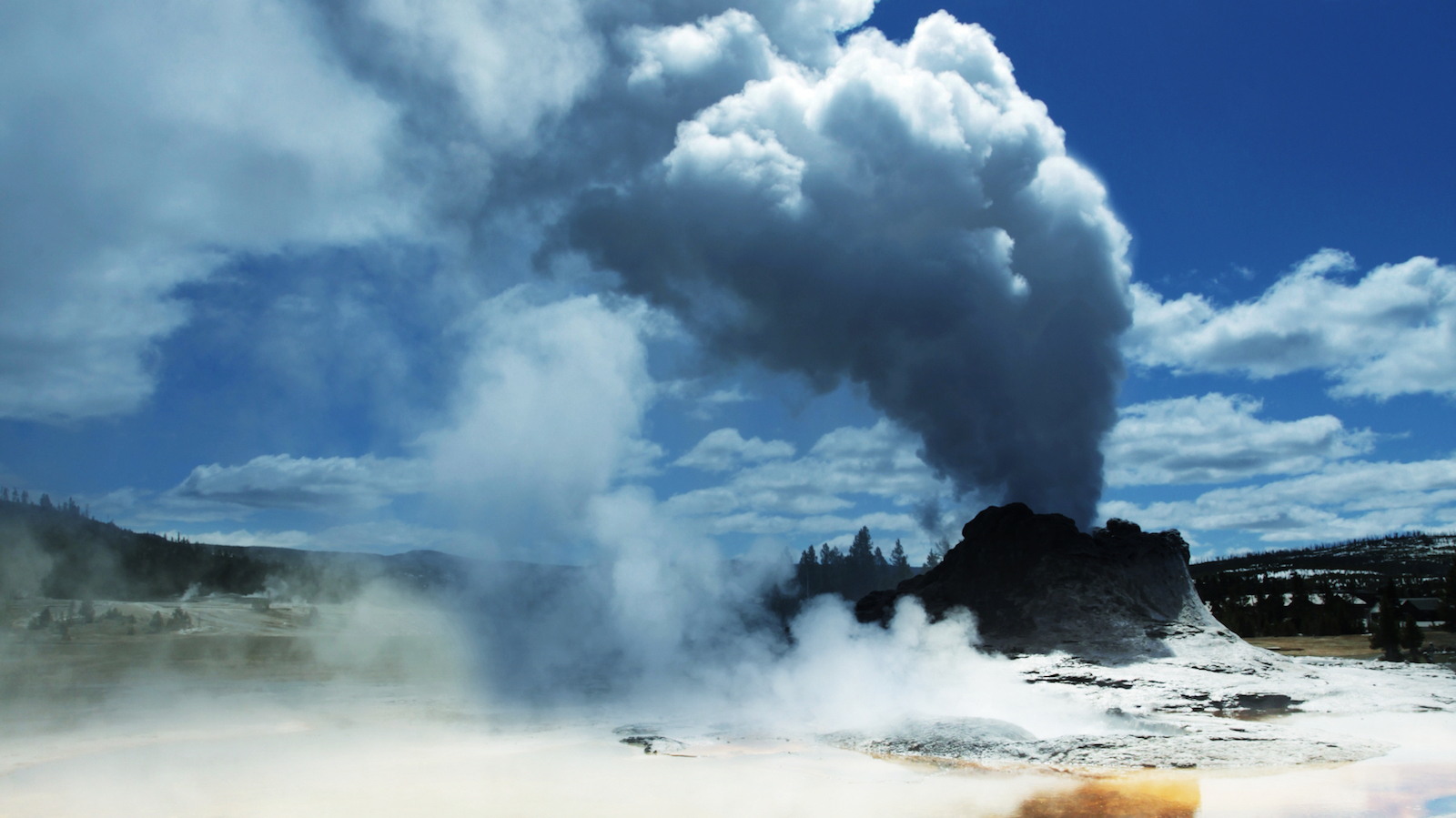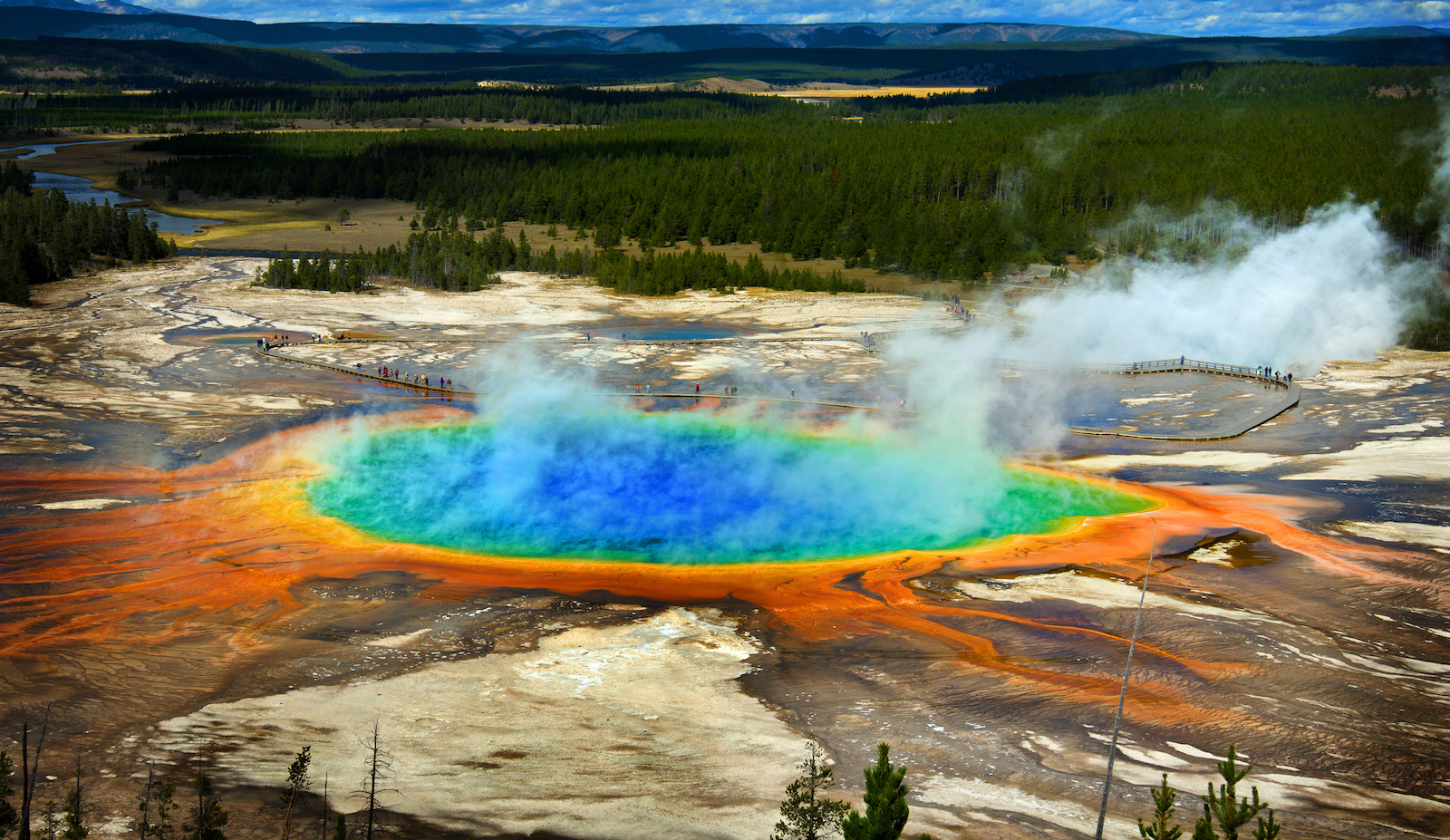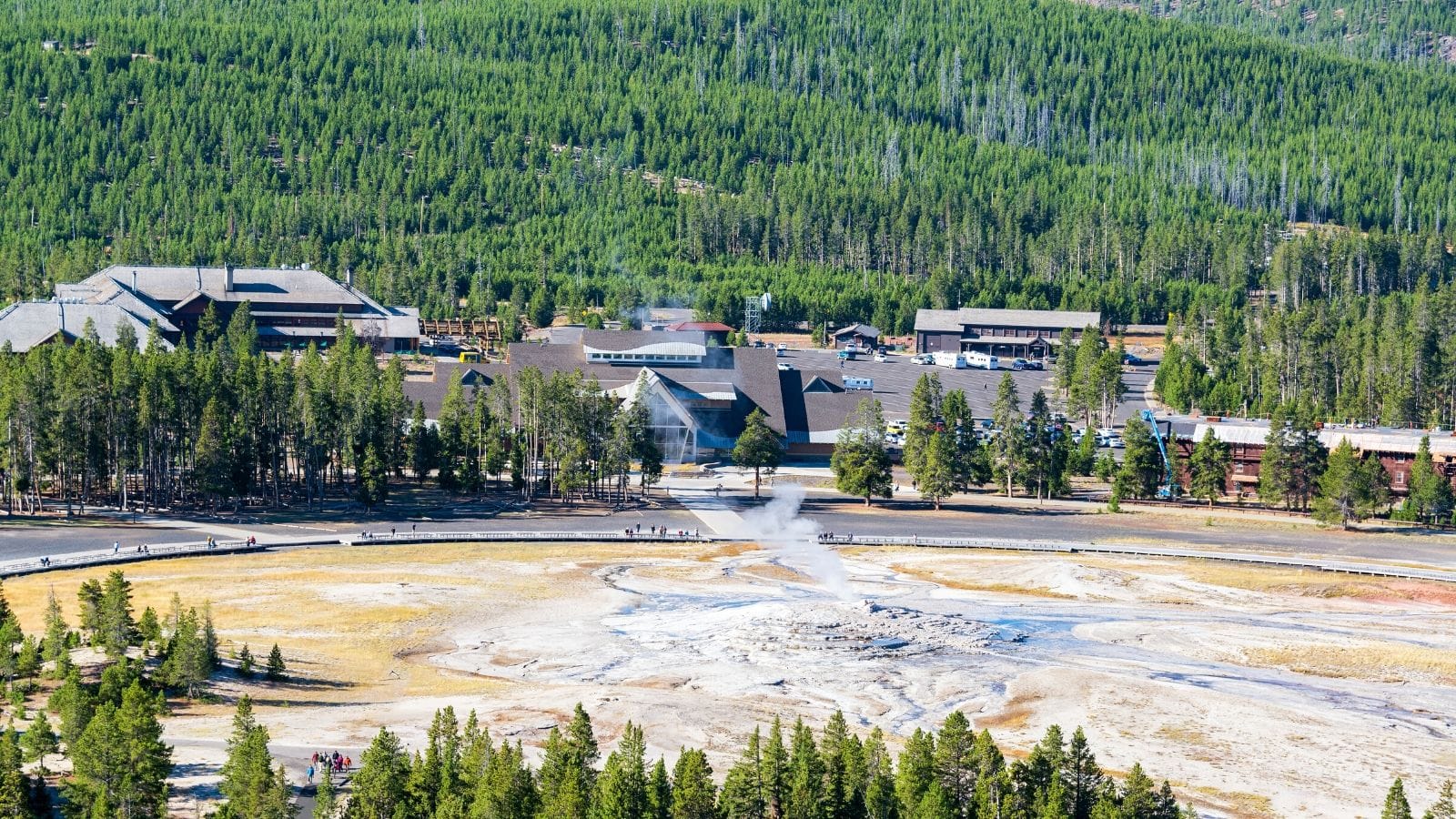
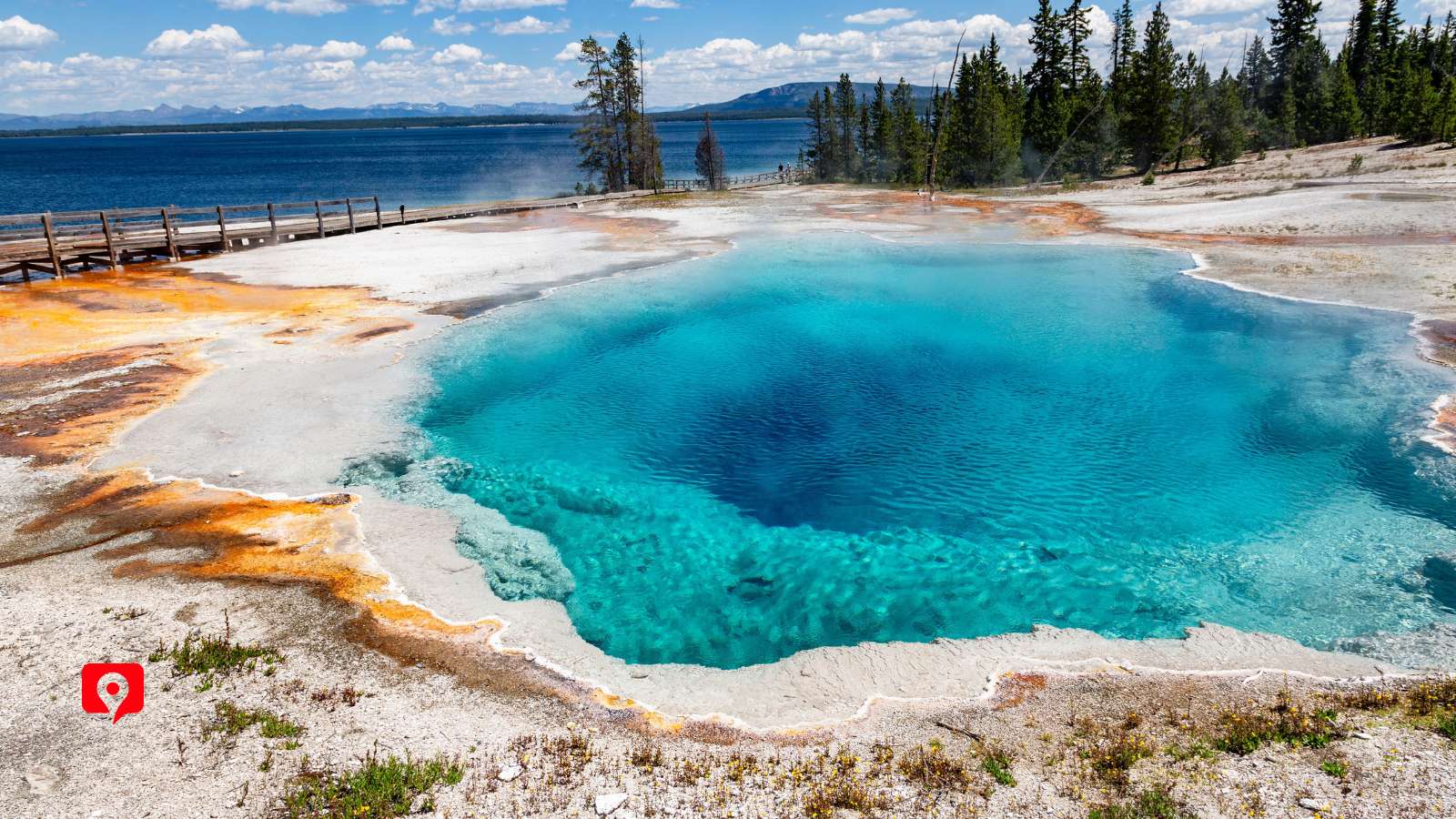


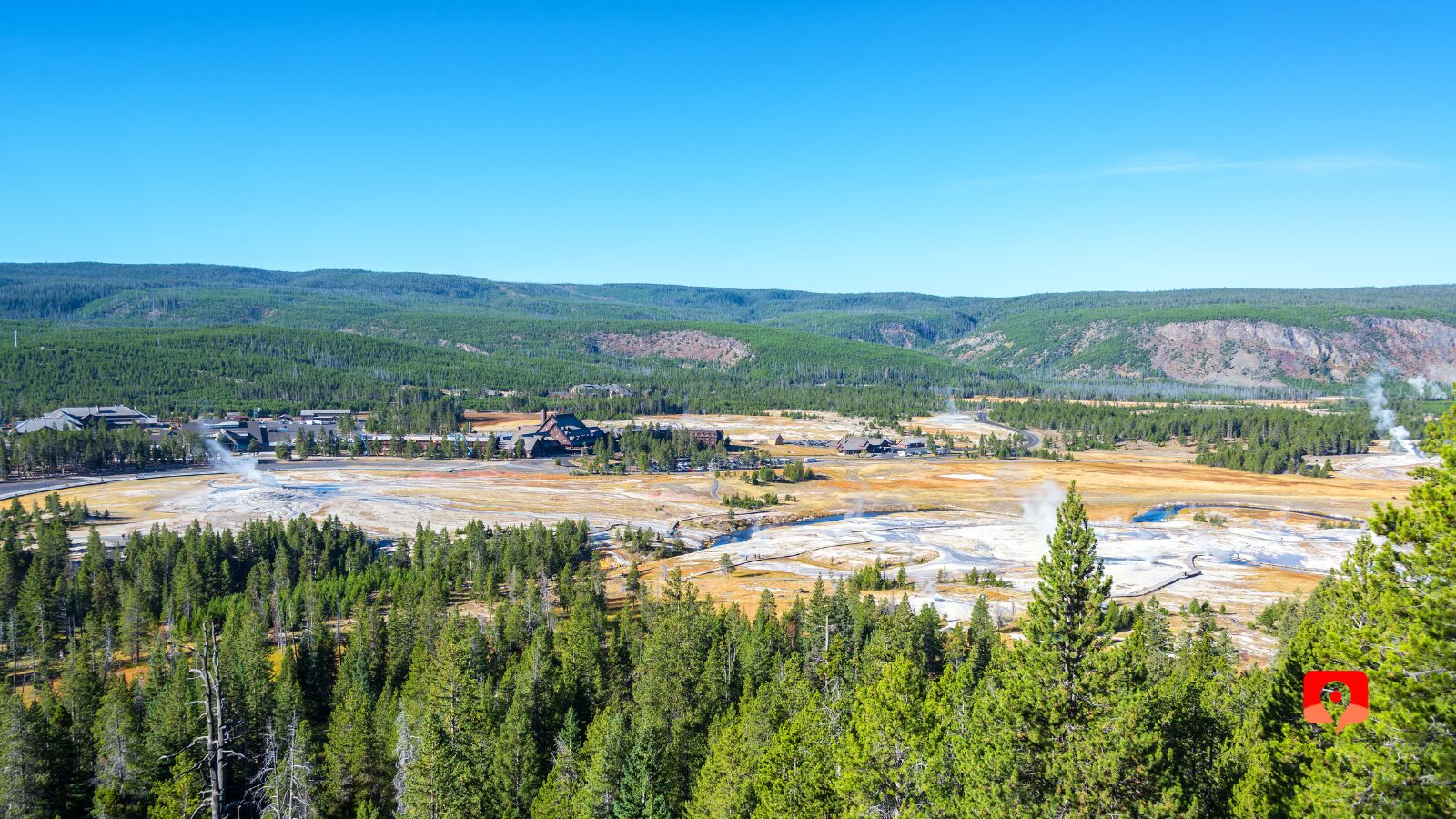
Old Faithful is arguably one of Yellowstone’s most famous features, and it’s definitely worth seeing. But what do you do when Old Faithful’s several-minute eruption is over? A lot. What many people don’t realize is Old Faithful is surrounded by many geysers, gorgeous waterfalls, great hikes and historic attractions. Here are some tips on how to see the best of the Old Faithful area and lose the crowds at one of the park’s most popular attractions.
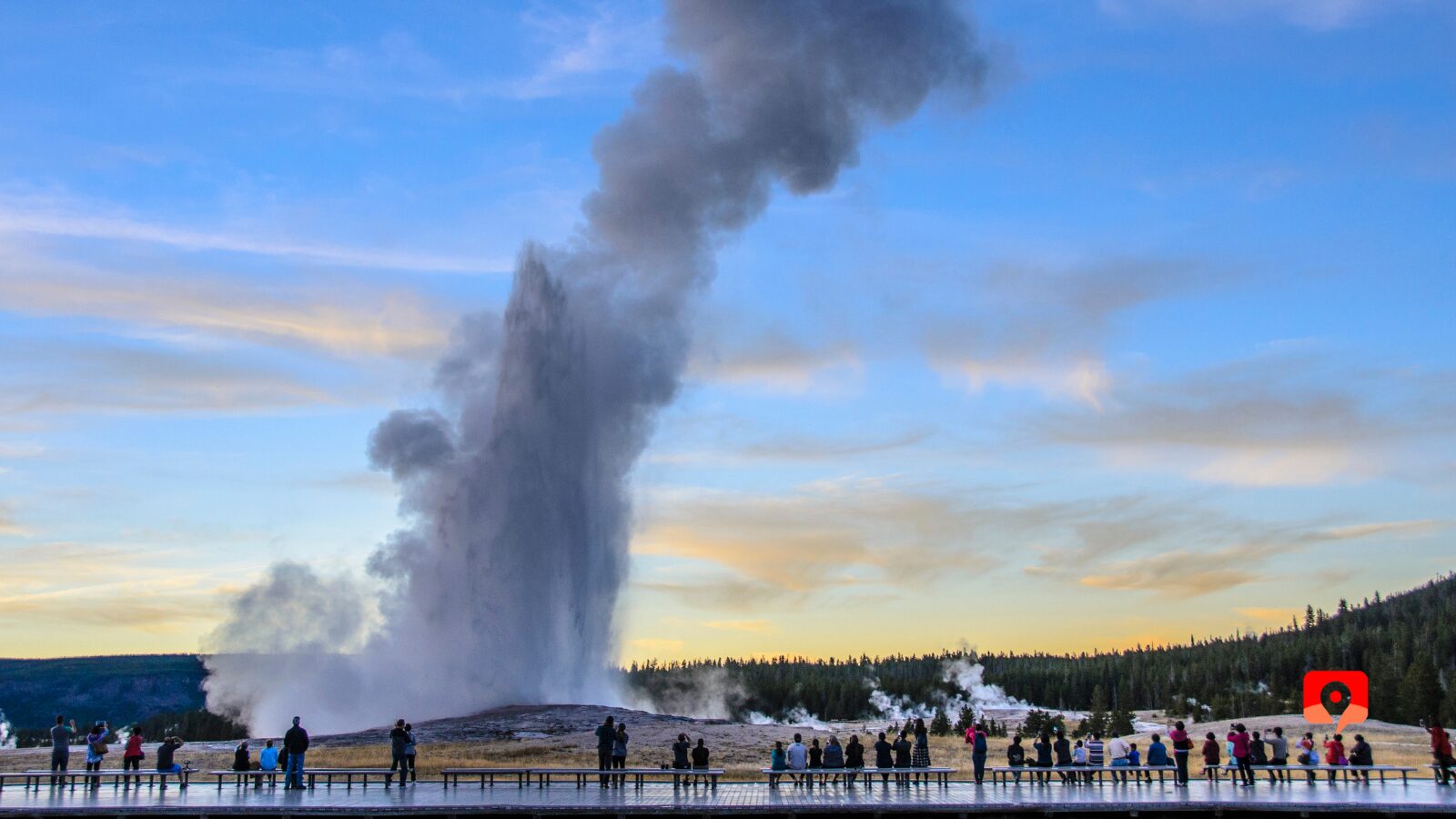
Timing is really everything when it comes to seeing Old Faithful erupt, especially if you have limited time to explore Yellowstone. Fortunately, Old Faithful consistently blows every 68 or 94 minutes, give or take 10 minutes. How do you ensure you’ll get to see this magnificent 106-184-foot geyser? Find out its predicted eruption schedule by following @GeyserNPS on Twitter, stopping in the Old Faithful Visitor Education Center, which is a 30-second walk from Old Faithful, or by calling the park’s recorded prediction line at 307-344-2751.
If you want to see Old Faithful erupt without having to jostle your way through a pack of tourists, we’ve got two recommendations for you. For adventure seekers, hike to Observation Point, a 1.5-mile roundtrip hike that leads you through a forest and onto a hilltop. From here, you’ll be far above the crowds, and you’ll enjoy incredible views of Old Faithful and the upper Geyser Basin.
Otherwise, visit Old Faithful really early in the morning or later in the evening. You’ll get a sense of solitude you’d never get showing up at any other time during the day. If waking up at sunrise is a challenge, grab a cup of coffee from Old Faithful Inn Bear Paw Deli or Old Faithful Lodge Bake Shop, both of which open at 6:30 a.m. and are a two-minute stroll to Old Faithful.
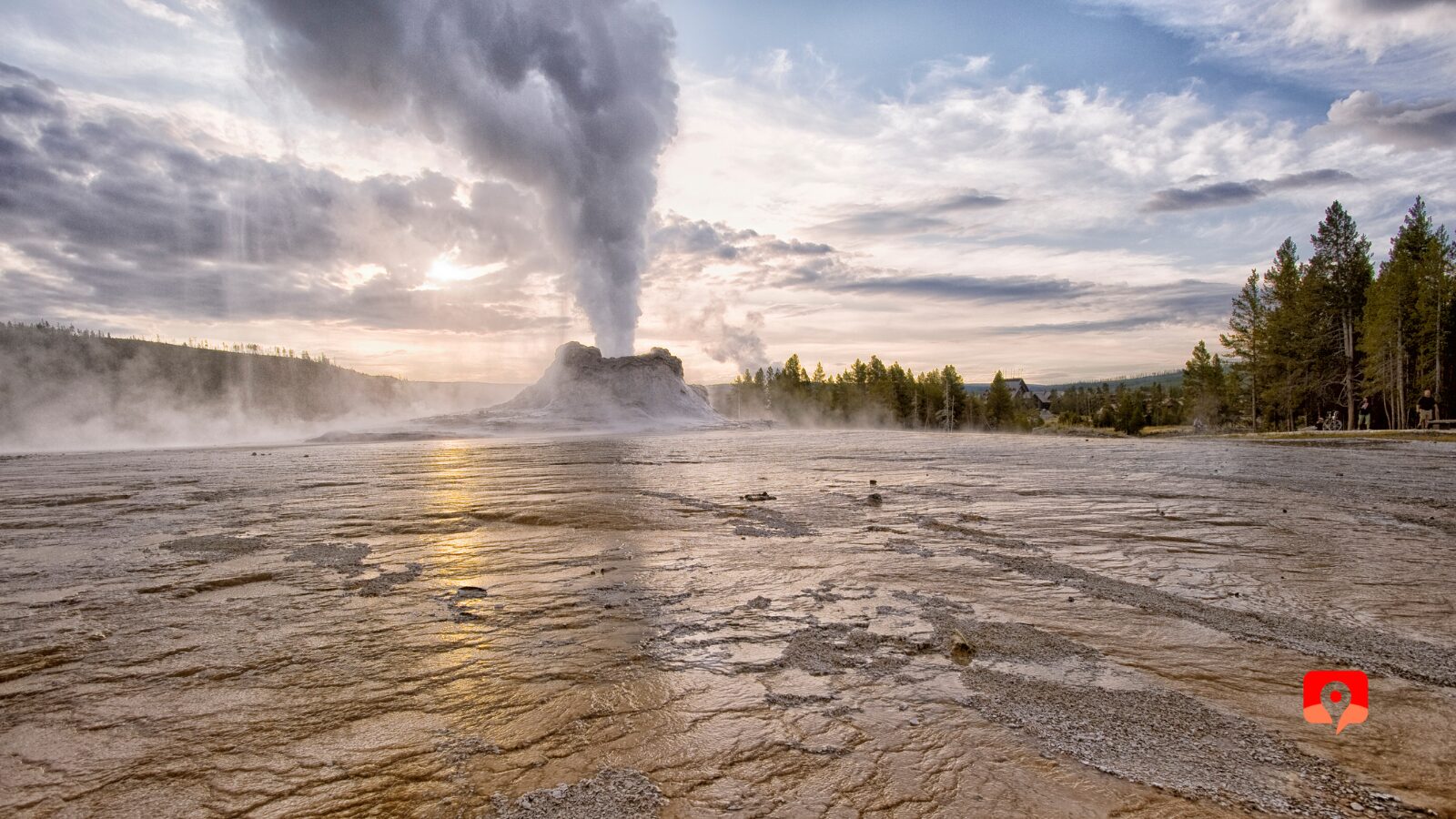
After you watch Old Faithful erupt, stop in the Old Faithful Visitor Education Center to see when the other four geysers in the Upper Geyser Basin are predicted to erupt — Castle, Grand, Daisy and Riverside. Or go to the park prediction webpage here. Then, plan your route through the Upper Geyser Basin, a sprawling geyser basin surrounding Old Faithful, timing it so you can see at least one of the four erupt. This magical basin contains the park’s largest concentration of geysers. And you can see many of them on the Upper Geyser Basin’s fantastic, easy three-mile loop that’s made of pavement and boardwalk. The bonus? You may see some of Yellowstone’s revered wildlife like bison and elk along the way. Depending on how quickly you walk and how often you stop, this loop could take you a couple of hours.
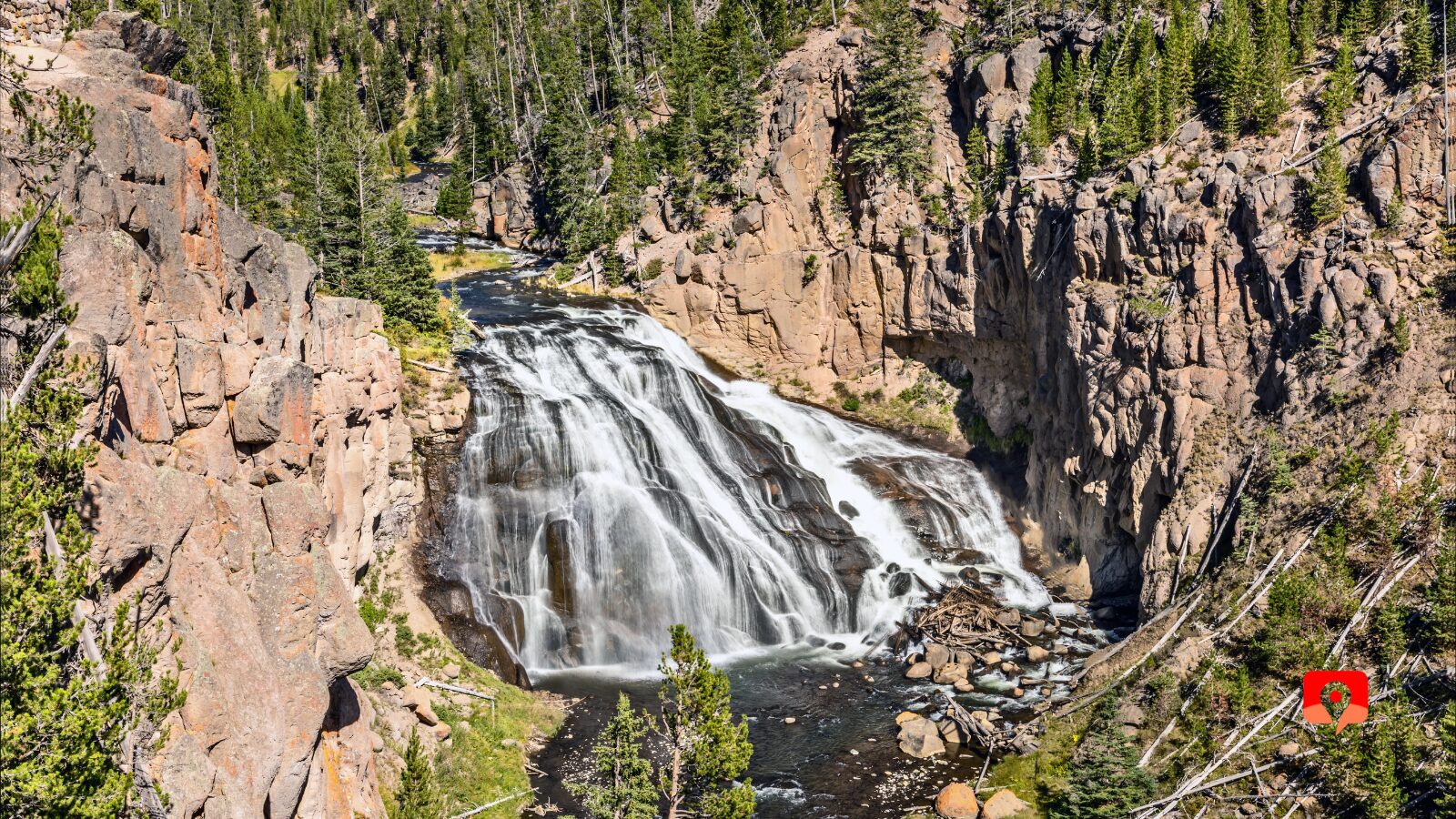
Want to see a waterfall the easy way? Drive to the Kepler Cascades pull off and do a very short walk to the platform viewing area. It’s just about a mile-and-a-half drive from the Old Faithful Lodge. Upstream, you’ll see the Firehole River cascading down a series of waterfalls, with the biggest drop being 50 feet. Downstream, you can watch the river flow toward the Old Faithful area.
For those looking for a bit more adventure, opt for the family-friendly Mystic Falls hike where you’ll burn more calories and have more of a backcountry hiking experience. The trailhead starts at the Biscuit Basin trailhead about two miles north of Old Faithful on the Grand Loop Road. Park at a pull out and explore Biscuit Basin via the boardwalk before leaving the far end of the boardwalk and hiking along a dirt path to Mystic Falls. The 70-foot Mystic Falls is tucked in a narrow canyon and is formed by the Little Firehole River dropping into the canyon from above. Stop short of the falls, which can be dangerous, for a 2.4-mile out-and-back excursion.
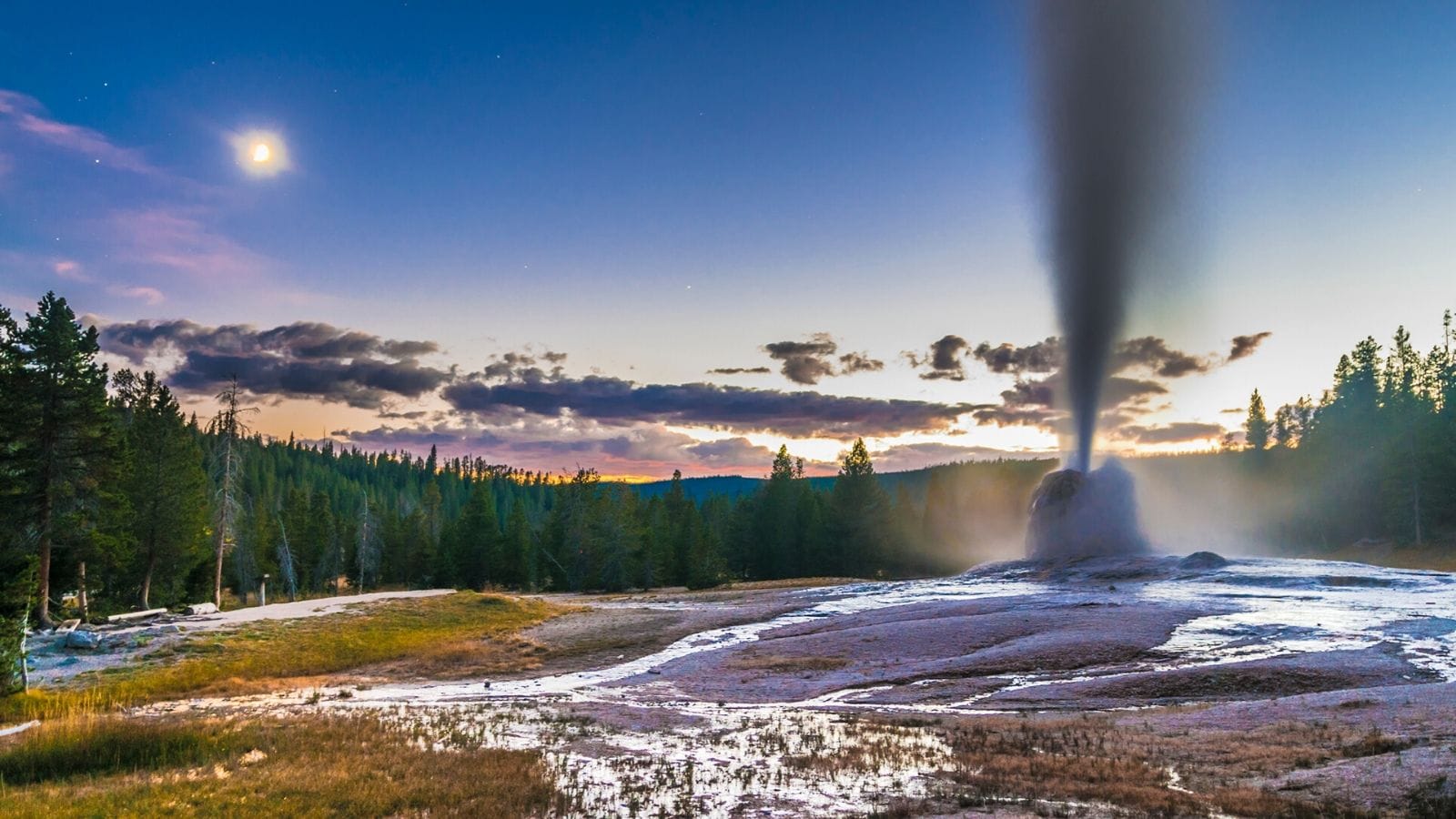
If you’re looking for a longer hiking trail with fewer people, we recommend the 4.8-mile round-trip hike to Lone Star Geyser. Under the canopy of the forest, you’ll follow the Firehole River for just over two miles until you get to a clearing where Lone Star Geyser sits. Not only is it a beautiful hike, but Lone Star erupts every three hours, making it totally feasible to time your arrival with the eruption. Pack a picnic and eat lunch in the meadow a safe distance from the geyser. You’ll find the trailhead east of the Kepler Cascades pull-out off the Grand Loop Road just 1.5 miles from the Old Faithful parking areas.
There are a few must-see cultural stops that help you get to know Yellowstone with a deeper appreciation. Old Faithful Visitor Center is one of them. Its state-of-the-art exhibits on Old Faithful and the park tell so many stories that really bring Yellowstone to life. Plus, you can find out when Old Faithful is erupting next in here. And the rangers on hand can answer any questions you may have.
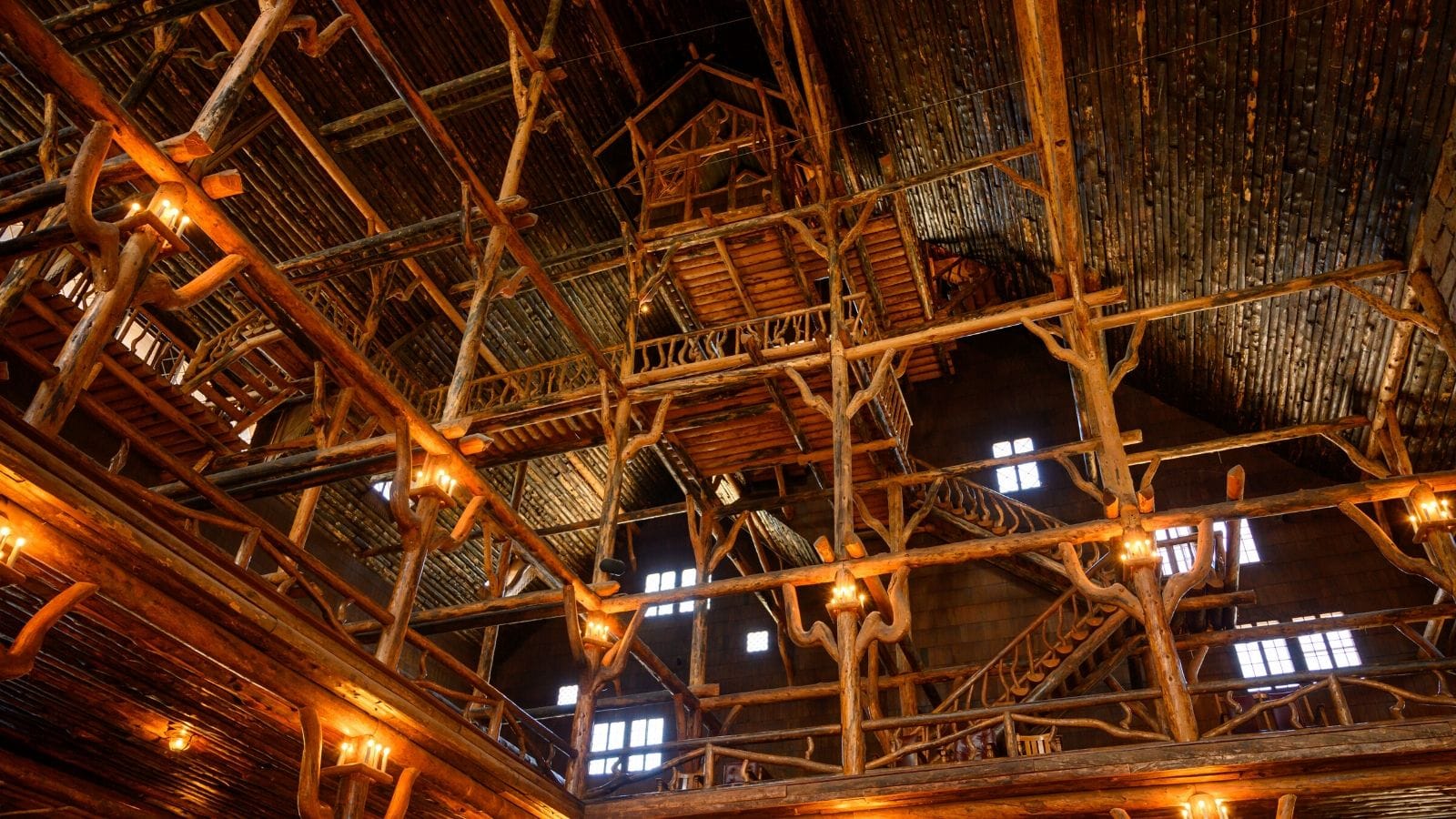
A three-minute walk down the path is the historic Old Faithful Inn, an iconic Yellowstone landmark that takes you back in time 120 years when the park was in its early days. When it was built in 1903-04, Old Faithful became the largest log cabin structure in the world. Step into the lobby to admire the exposed intricate woodwork and beams of this gorgeous iconic hotel. Around you, you’ll hear languages from all over the world spoken. For a special dinner, make reservations in advance to eat in the Old Faithful Dining Room where 50 percent of the food is sustainably sourced.
For more of Yellowstone’s fascinating behind-the scenes stories, local tips and directions that play automatically in your car based on your GPS location, download the GyPSy Guide Yellowstone and Grand Teton Audio Tour app.

The Pools of Ohe’o, also known as the Seven Sacred Pools, are a popular destination for tourists and locals alike along Maui’s famous Hana Highway (we recommend the Road to Hana audio tour for tips and stories that will help you make the most of this popular road trip). Located in Haleakala National Park, the pools are situated in a rainforest ravine where stunning waterfalls cascade from one pool into the next.

The area where the Pools of Ohe’o are located is called Kipahulu and was home to indigenous Hawaiians dating back centuries. Surrounding the pools are over 700 archaeological sites, including the third largest temple ruin in Hawaii. As you explore the area, it is important that you do not touch or otherwise disturb any of the ruins or artifacts you encounter, and that you stay on designated trails.
Translated from the ancient Hawaiian language, “Ohe’o” means “something special,” which is a fitting title for such a magnificent place. The area, however, goes by many names these days.

Depending on the weather and the amount of rainfall, there can be up to 20 swimmable pools in the Ohe’o Gulch. Each pool feeds into the next, cascading down along the Palikea stream.
The pools are located in Maui’s lush rainforest system, thus the weather here is much wetter than in other regions of the island. During the warmer months, the rainfall is at its peak, delivering up to 22 days of rain per month, while in the cooler months, rainfall decreases. Rainstorms can come and go quickly, and be replaced with periods of warm sunshine.
While the rain can come and go at a moment’s notice, the temperatures remain pretty constant. Year-round daytime temperatures stay in a balmy range between 70º-80ºF (21º-27ºC).
The Kuloa Point trail is an easy half-mile loop that takes you around the pools, past a cultural exhibit, and out to breathtaking ocean views. The trailhead terminates at the Kipahulu Visitors Center. Swimming access to the pools is possible from the trails, but only when conditions allow and the park service has opened the pools for swimming. Obey all signage and park ranger instructions.

Aside from the Kuloa Point trail, the Pipiwai Trail is one of Maui’s best hikes. This moderately challenging out-and-back hike takes about 3 hours to complete, and covers 3.8 miles. The jungle trail takes hikers past ancient Hawaiian temple ruins to progressively more beautiful waterfalls, and ends at the spectacular 400-foot Waimoku Falls.

All camping in Haleakala National Park is by reservation only, and can be accessed at the NPS Haleakala website or by going directly to recreation.gov
The Kipahulu campground is close to the Ohe’o Pools and the Pipiwai Trail, and offers the most in terms of amenities, including bathrooms and trash cans.
As of June 2022, the pools are not open for swimming but can be seen from the Kuola Point trail.
Ohe’o Pools are among the most popular destinations in this part of Maui, and can become crowded any day of the year. To avoid the crowds, arrive well before noon. A good way to ensure a more private experience is to camp overnight and wake up early for the short hike in.
There is a $30-per-vehicle entrance fee to Haleakala National Park, and all visitors are required to purchase a recreational use pass upon entering the park. For individuals who are biking or walking in, the fee is $15 per guest.
Ample parking is available at the Kipahulu Visitor Center.
As of June 2022, the Pools of Ohe’o are not accessible for swimming. They can be viewed safely from the Kuloa Point Trail.
The Haleakala National Park forbids jumping into the pools, though the signage often goes unheeded. There is great risk to life and limb when attempting to jump from the cliffs into the pools as is evidenced by the clippings posted at the ranger station which document the many tragedies that have occurred over the years. Though it may be tempting to jump, we recommend caution and adherence to posted signage.
How about those sacred pools? Learn all about planning your trip to Maui, in our extensive Maui Trip Planner. If you’re ready for your road trip to Maui, perhaps this Maui – Road to Hana tour will be right for you.
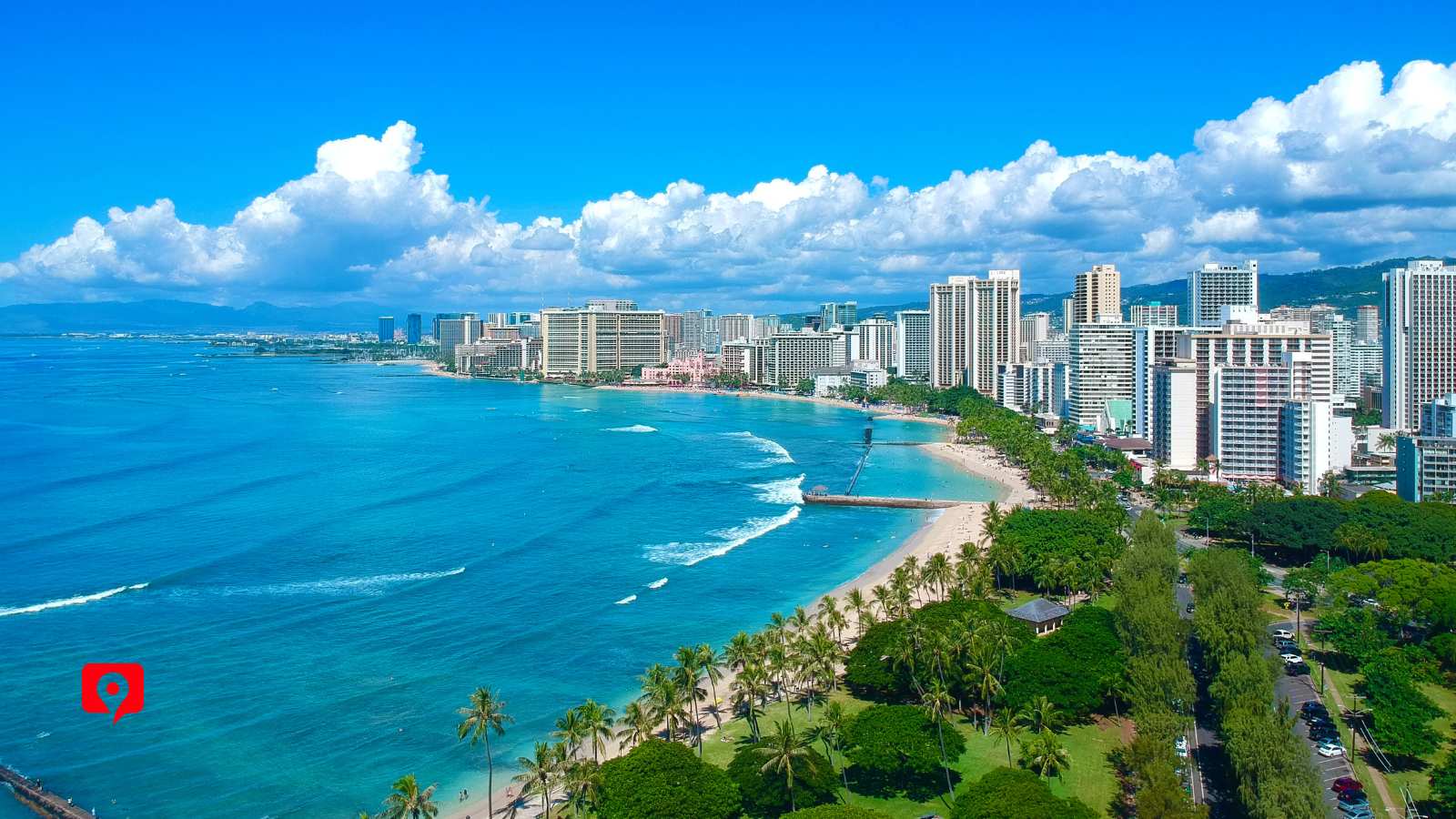
Hanauma Bay deserves its top ranking as one of Hawaii’s best spots for snorkelling, with hundreds of tropical fish in shallow coral reefs and a protected bay. But this pristine beach is so popular that reservations are now required, so let’s take a moment to cover what you need to know so you don’t miss out on your next trip to Oahu.
The Hanauma Bay Nature Preserve is open to the public from Wednesday to Sunday, and is closed on Mondays and Tuesdays. You’ll want to plan your arrival time carefully – the park opens at 6:45am and closes sharp at 4:00pm, and there’s no entry after 2:00pm. Only 1,000 guests are allowed each day, and so you’ll want to book your tickets in advance. Walks in without a reservation are allowed, but are VERY limited so we highly recommend making a booking to avoid disappointment.
Online reservations can be made two days in advance starting at 7:00am (HST) – that’s Hawaii Standard Time – and will sell out in minutes. Once the reservations have been made, no changes are allowed and you’ll need to make sure to bring your ID with you on the day for confirmation upon entry.
Entry fees apply for adults, and children 12 and under are free. Parking is available on a first come first serve – and it’s cash only, so make sure to bring a few coins with you. Having a reservation is not a guarantee for parking, and the small parking lot fills up early so it’s best to book an early timeslot. Other options are to take “TheBus” (Oahu’s public transport system) or Uber/Lyft. Snorkelling gear is available for rent on-site if you don’t have your own, but make sure to bring your beach gear, reefsafe sunscreen, and a cooler for drinks and snacks.
And remember, everyone is required to watch the 9-minute educational video to learn about the park’s marine life, safety rules and conservation efforts.
Now start practicing… humuhumunukunukuapua’a…
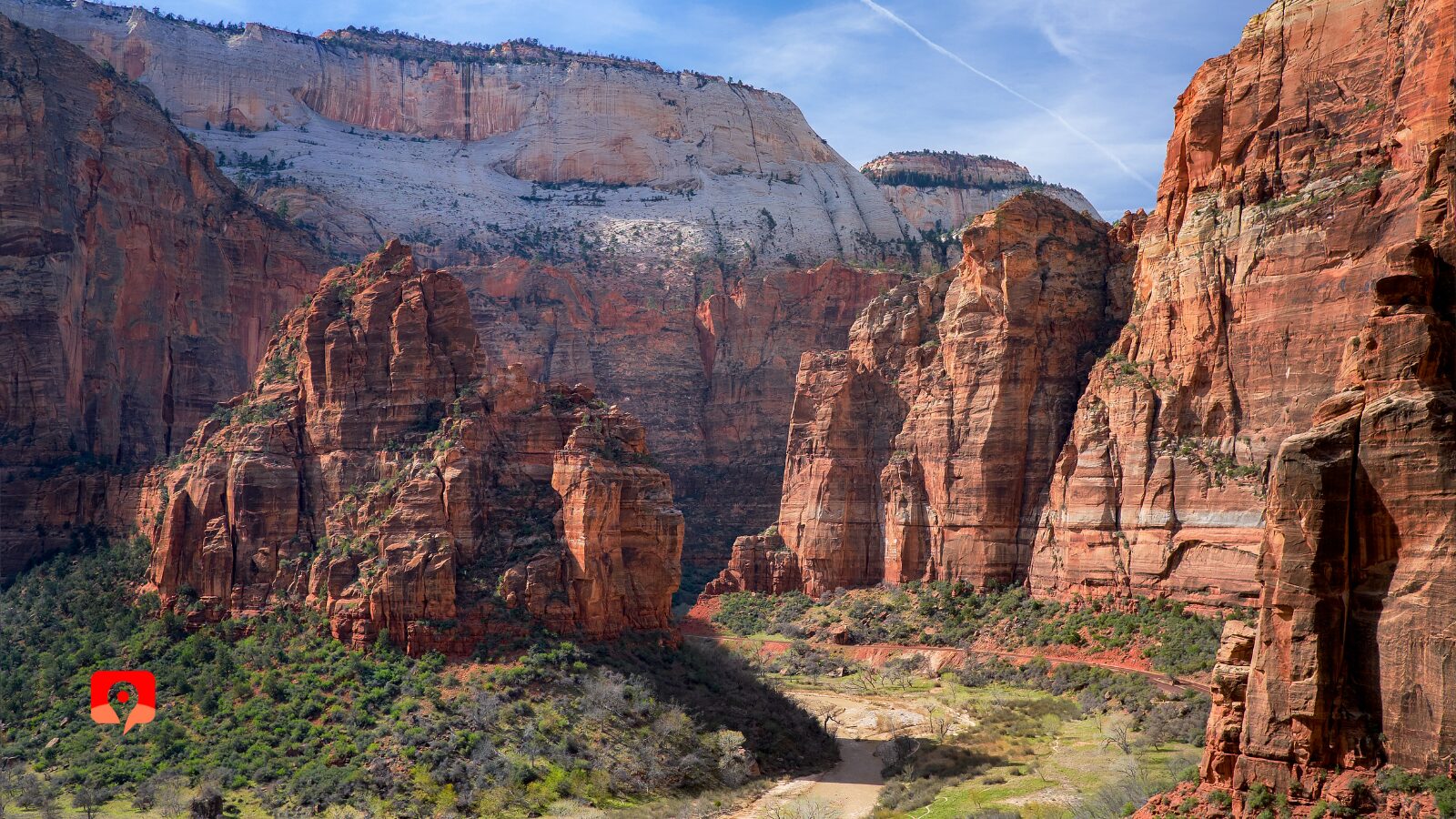
Headed on a road trip to Zion and Bryce Canyon National Parks? Depending on when you’re going, we wanted to give you a heads up that there’s some areas inside the parks that you won’t be access in a private vehicle, and you’ll want to take a shuttle to reach some of the popular trailheads and viewpoints. But don’t worry, these free shuttles are included in your park pass and you don’t even need a ticket.
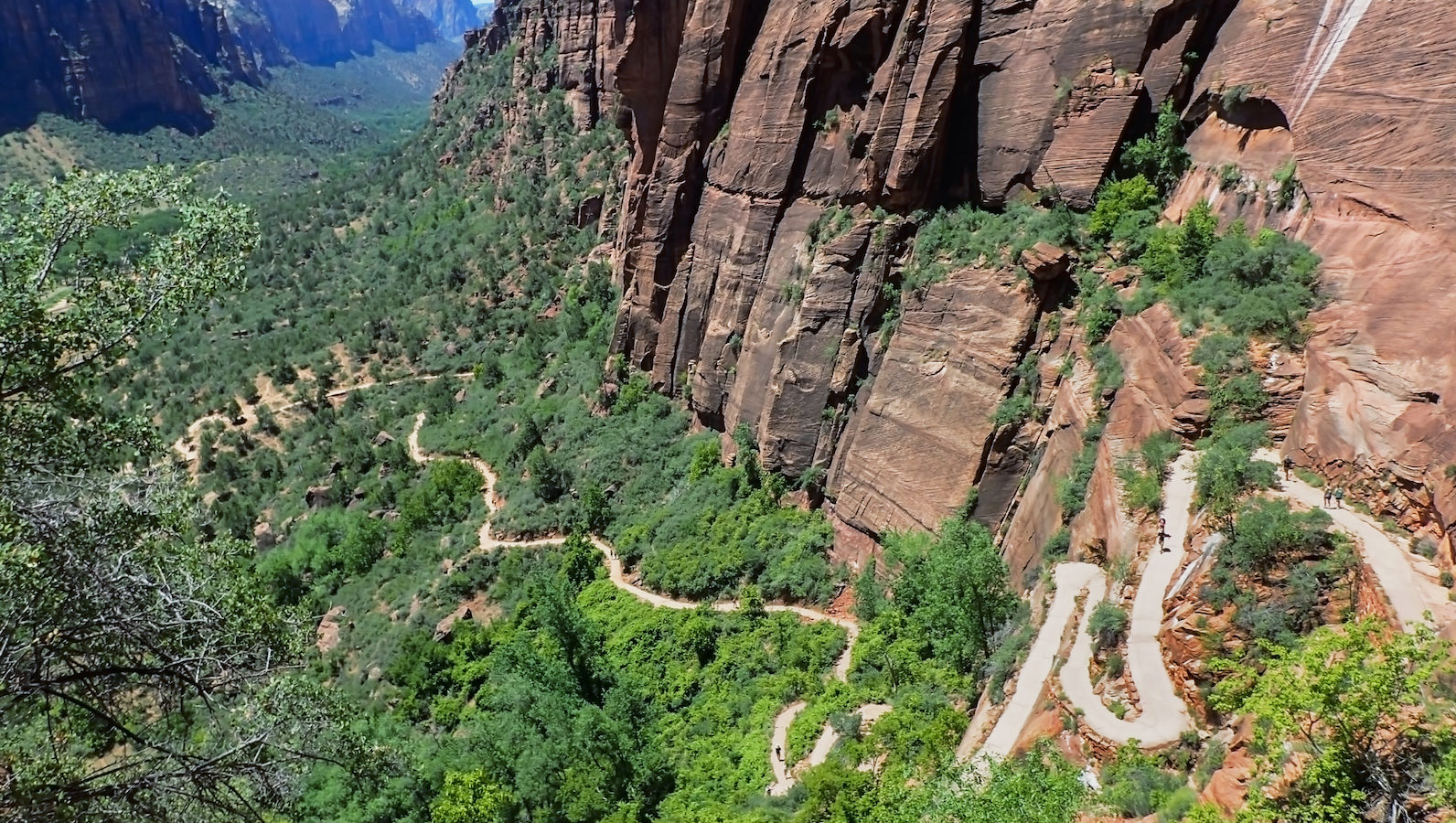
In popular Zion National Park, all visitors must use the Zion Shuttle System to access the Zion Canyon Section of the park during peak season. There’s no shuttle system along the Zion-Mount Carmel Highway or the Kolob Canyon section of the park, and you’re free to drive yourself along these roads at anytime of year (just bear in mind that there are size limits for the Zion-Mount Carmel Tunnel).
You can check the exact dates that the Zion shuttle is mandatory on the National Park Service website, but typically it runs from March to November, on weekends in February, and during the last week in December. The first shuttle leaves the visitor center at 6:00am and stops at numerous viewpoints and trailheads in the park until the last shuttle leaves the Temple of Sinawava at 8:15pm. And it’s okay if you miss one, shuttles depart every 6-10 minutes at each stop and you can just jump on the next one. To get the shuttle, it’s easiest to park at the Zion Canyon Visitor Center or in designated parking areas in the town of Springdale (and get the free Springdale Shuttle in to the park).
When you reach Bryce Canyon, the park shuttle runs from April to mid October to the most popular overlooks, amenities and trails along the Bryce Amphitheater section of the park. Unlike Zion, the shuttle is optional (except for vehicles over the size limit) although it’s still a convenient way to get around, especially for day hikers. The best place to park your car and get the shuttle is from the Shuttle Station in Bryce Canyon City, and shuttles run every 15 minutes throughout the day from 8:00am to 6:00pm.
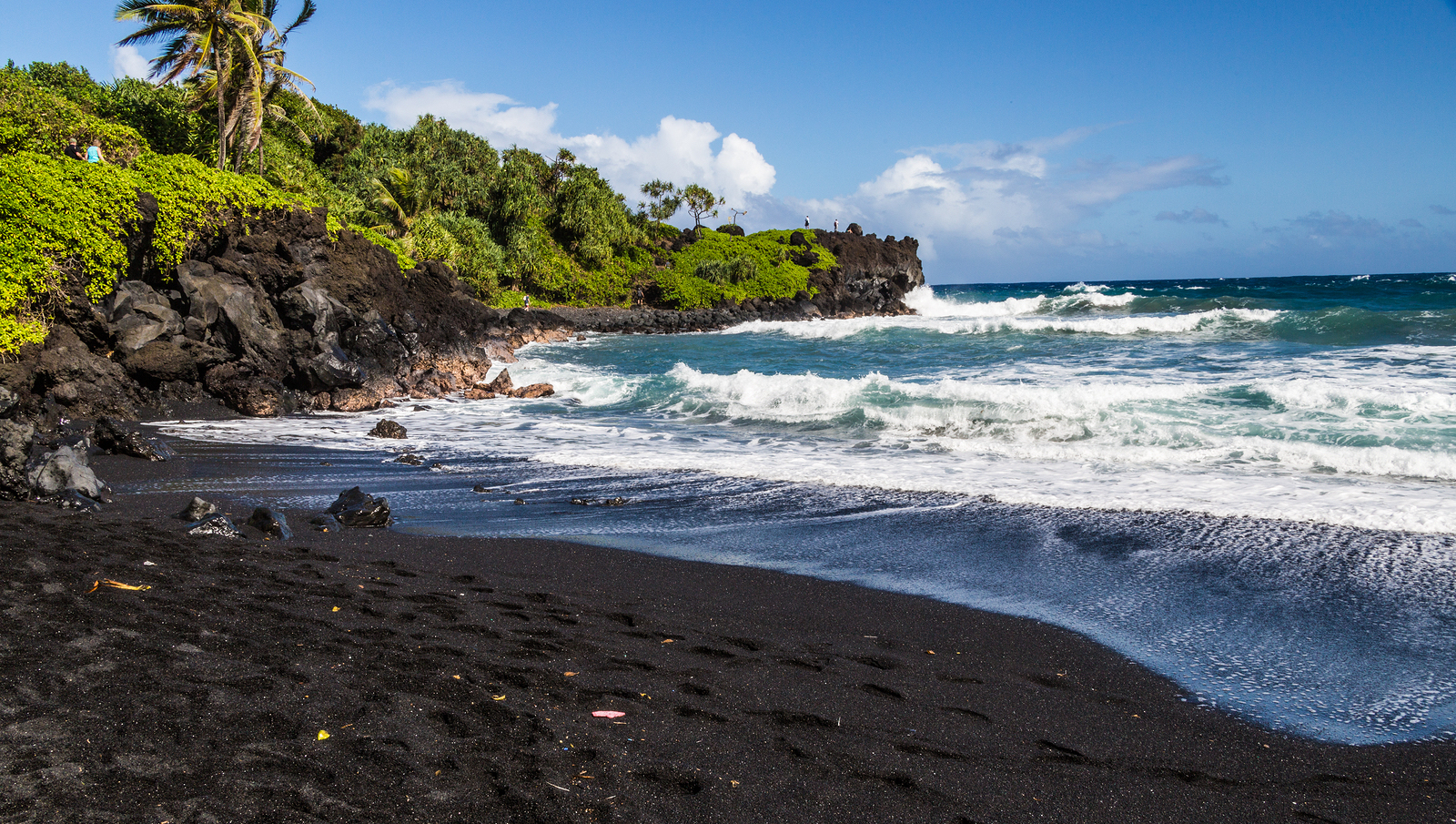
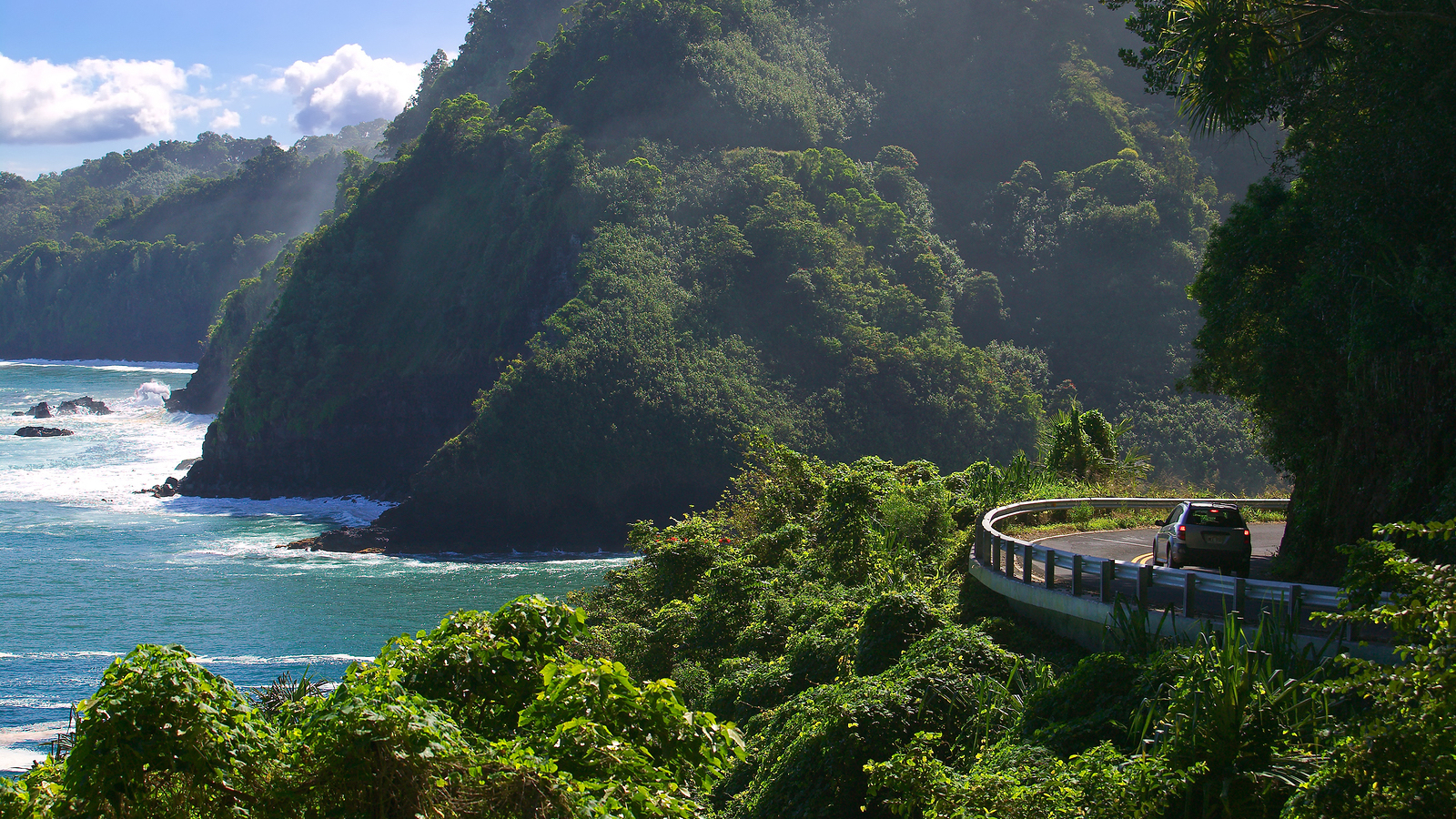
The famous Black Sand Beach, along the Road to Hana, Maui, Wai’anapanapa, now requires advanced reservations for parking
Who here loves artichokes? Well I’ve got to say I don’t mind them, so long as they are prepared really well.
It’s a favorite in Mediterranean cuisine. If you’ve never tried one, then it’s something you should have at least once, best served as an appetizer, maybe at a finer local restaurant.
California’s agricultural business is worth billions and some produce is specifically associated as being Californian, like pistachios and almonds, or even prunes and avocados – and just for fun, let’s throw zinfandel in there too.
Though not as wildly popular, California is considered a world center for artichokes too.
Why does this matter? Well the namesake of the State Park just ahead is considered the person who first brought artichokes to California. He was the grandson of an early settler to these parts, at a time when the Spanish and Mexicans controlled these lands.
If you’re thinking, should I really care about artichokes, well let me tell you someone who thought it was important enough – in 1948 Marilyn Monroe was bestowed the title of the first Artichoke Queen.
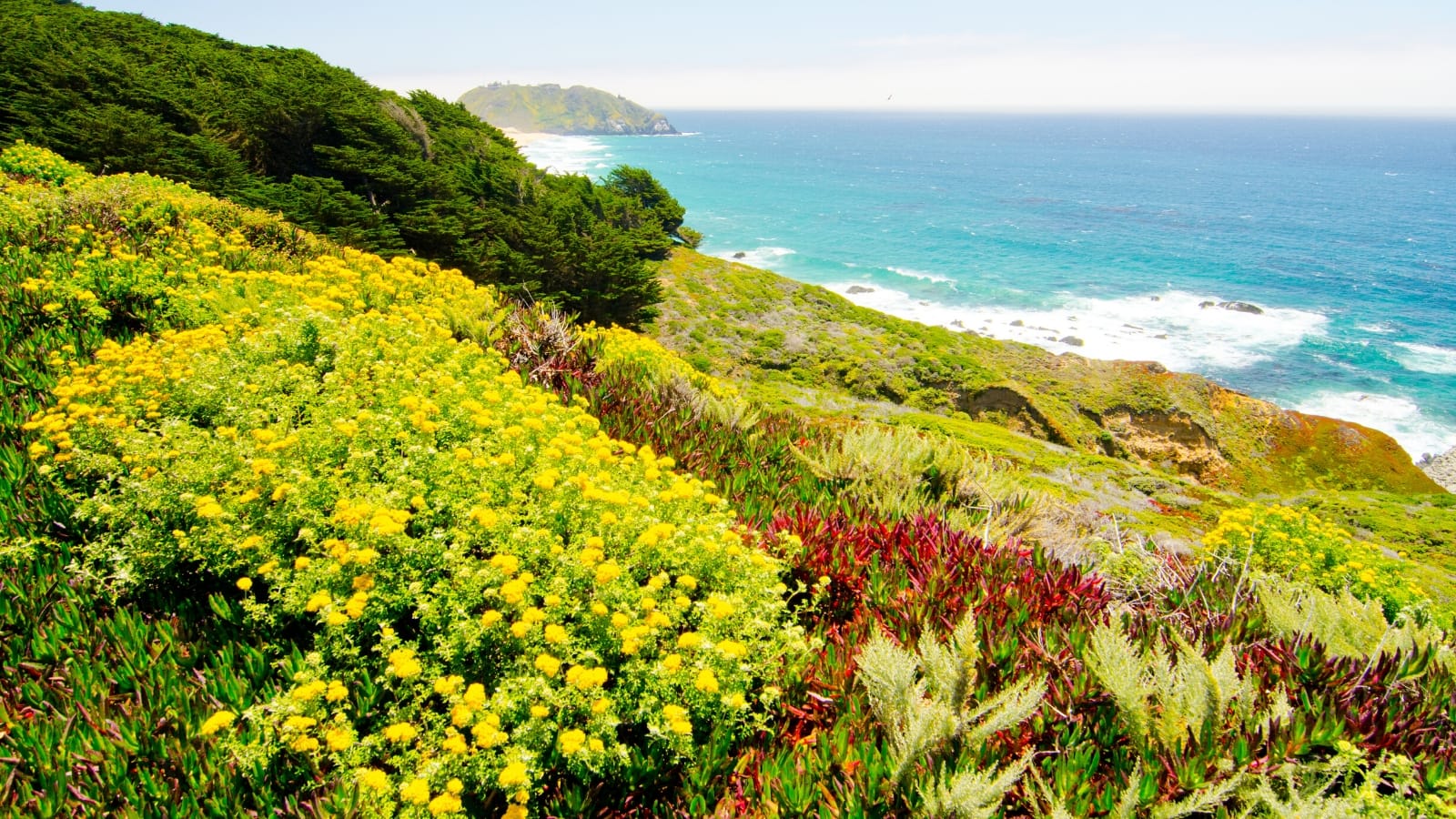
So, we are approaching the Andrew Molera State Park, nestled in a forested canyon. Although this park is not one of our top must-do destinations on our drive, there is still plenty here to keep us occupied if we are exploring deeply.
Over 20 miles of trails run along the bluffs, beaches, the Big Sur River and up into the hills, as well as to the 40 foot Highbridge Falls.
You can also find the oldest structure in Big Sur, the Cooper Cabin, and it’s accessible via a short trail.
It was built out of redwood around 1861. Another building worth investigating is the Ranch House Museum, which offers a glimpse into the lives of Big Sur pioneers. The museum is only open on weekends.
Those interested in the plight of the California condor should definitely check out the Big Sur Discovery Center, again weekends only and from Memorial Day through Labor Day. Here you can learn all about the endangered condor and the bald eagle and the efforts of the Ventana Wildlife Society to reintroduce both birds into their natural environment.
Parking for Andrew Molera State Park is up ahead.
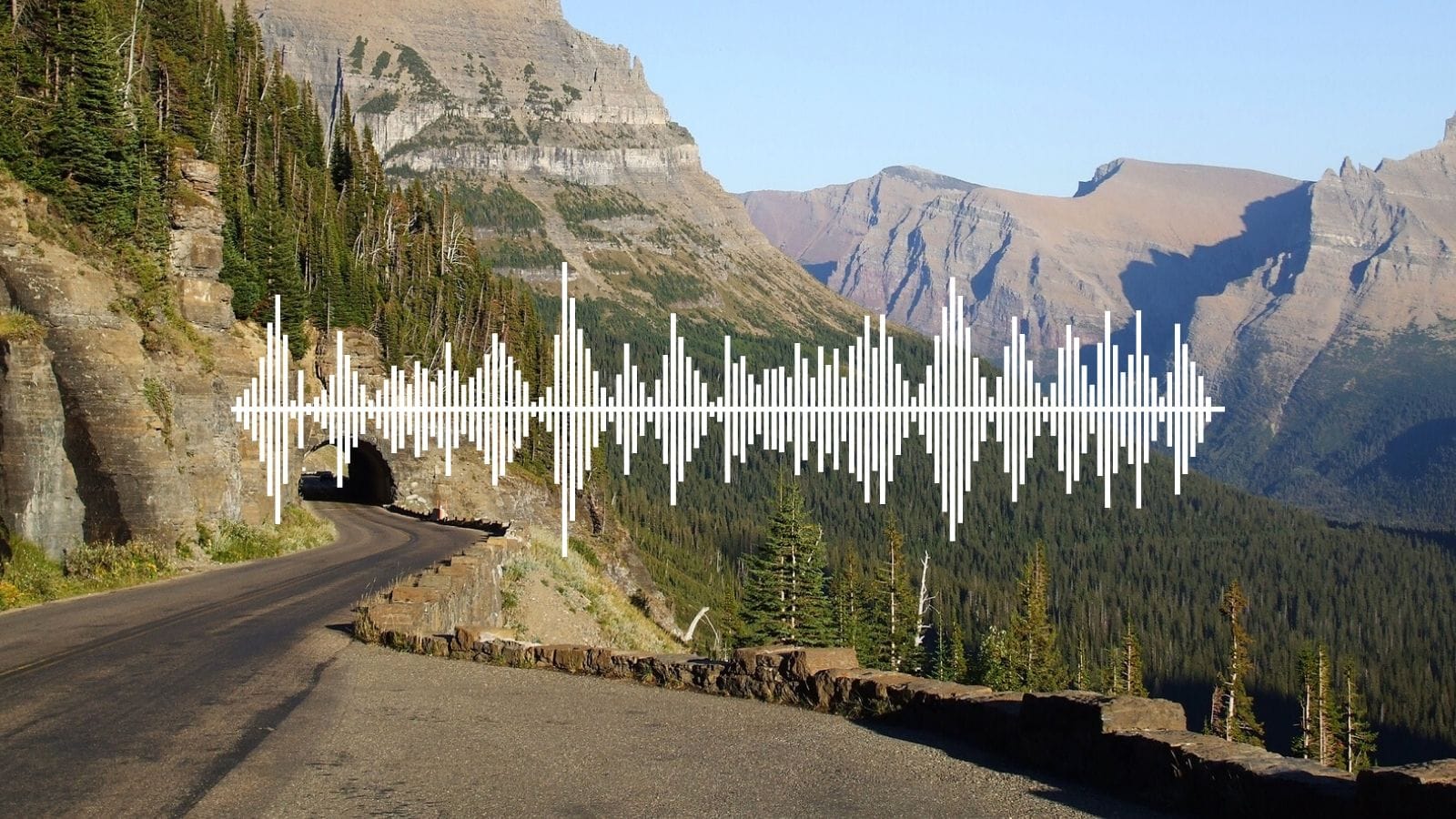
So, let’s take a survey here. What is the lowest hourly wage you’ve worked for? Over three dollars? That’s luxury!
The guys that worked on this road would have to have been some of the toughest people I can think of. As we move up the road, you will see why.
Remember that this was 1920’s and 30’s, entering the Great Depression when men were desperate for work and even though this work was very seasonal – they took it. It was a hodgepodge of men from all over the world that were paid 50 cents to $1.15/hour.
At the peak of construction over 300 men were scattered through the valley living in tent camps with many different skills and pay. The labourers were the cheapest to employ and they were the ones down in that 50 cents/hour range.
Cat skinners – those are the guys that drove the bulldozers and graders, were paid the best, along with the “Powder Monkeys. Next to the Powder Monkey…who was the most important person on the crew? The Camp Cook of course!
As well as the dedicated workforce, local farmers and their boys were also hired on and that helped the communities nearby.
One young Montana lad showed up to work as a cat skinner and the foreman waved him off, saying he was too young. The kid replied, “See that guy working the grader? That’s my little brother and I taught him everything he knows.” He got hired on the spot.
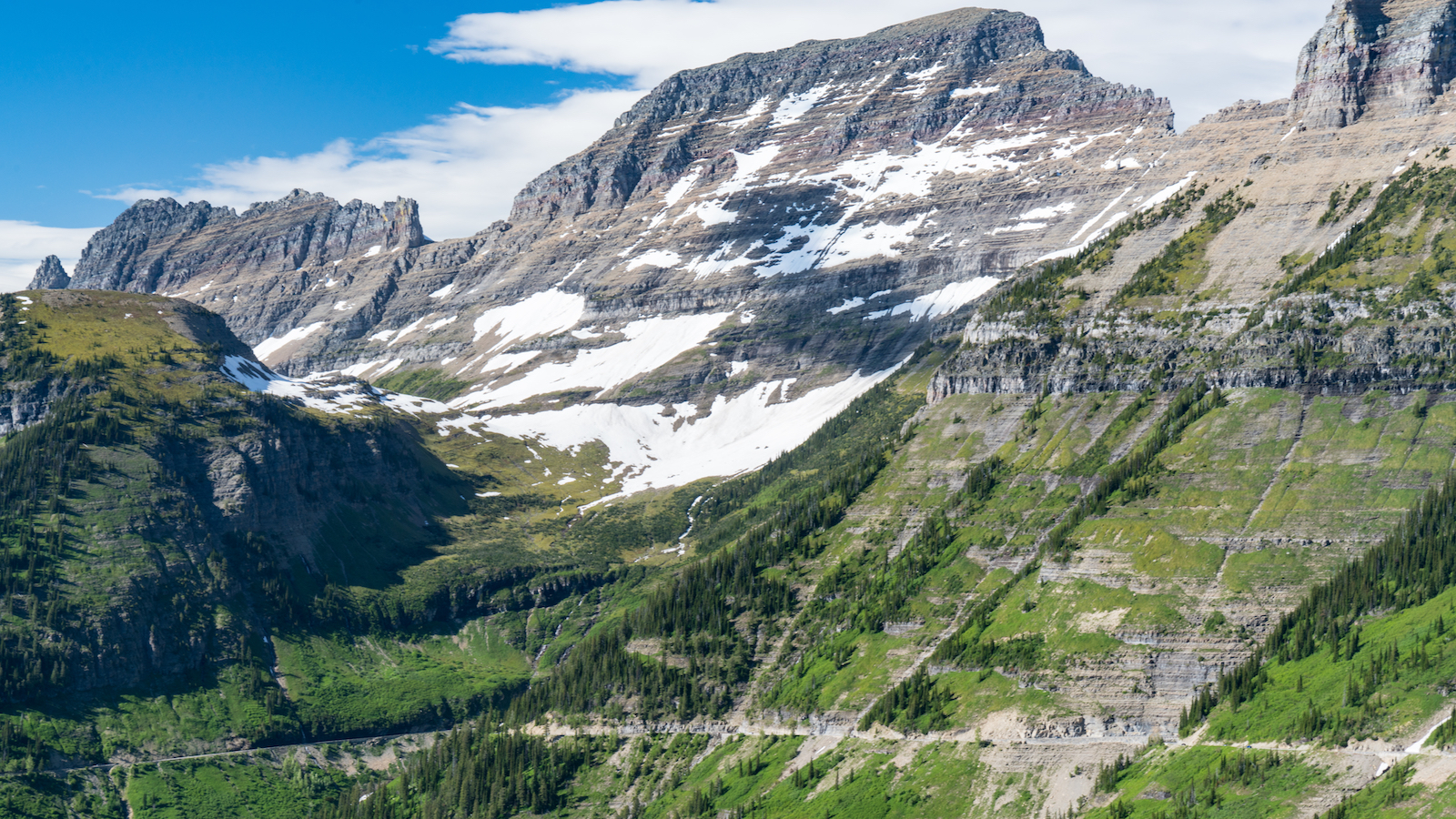
As we go along, we will come to some places where there are gaps in the trees and we’ll get a quick but impressive view back up into the mountains where we came from. I can only imagine how the constructors felt when they looked up to where the plans told them they were supposed to create the road!
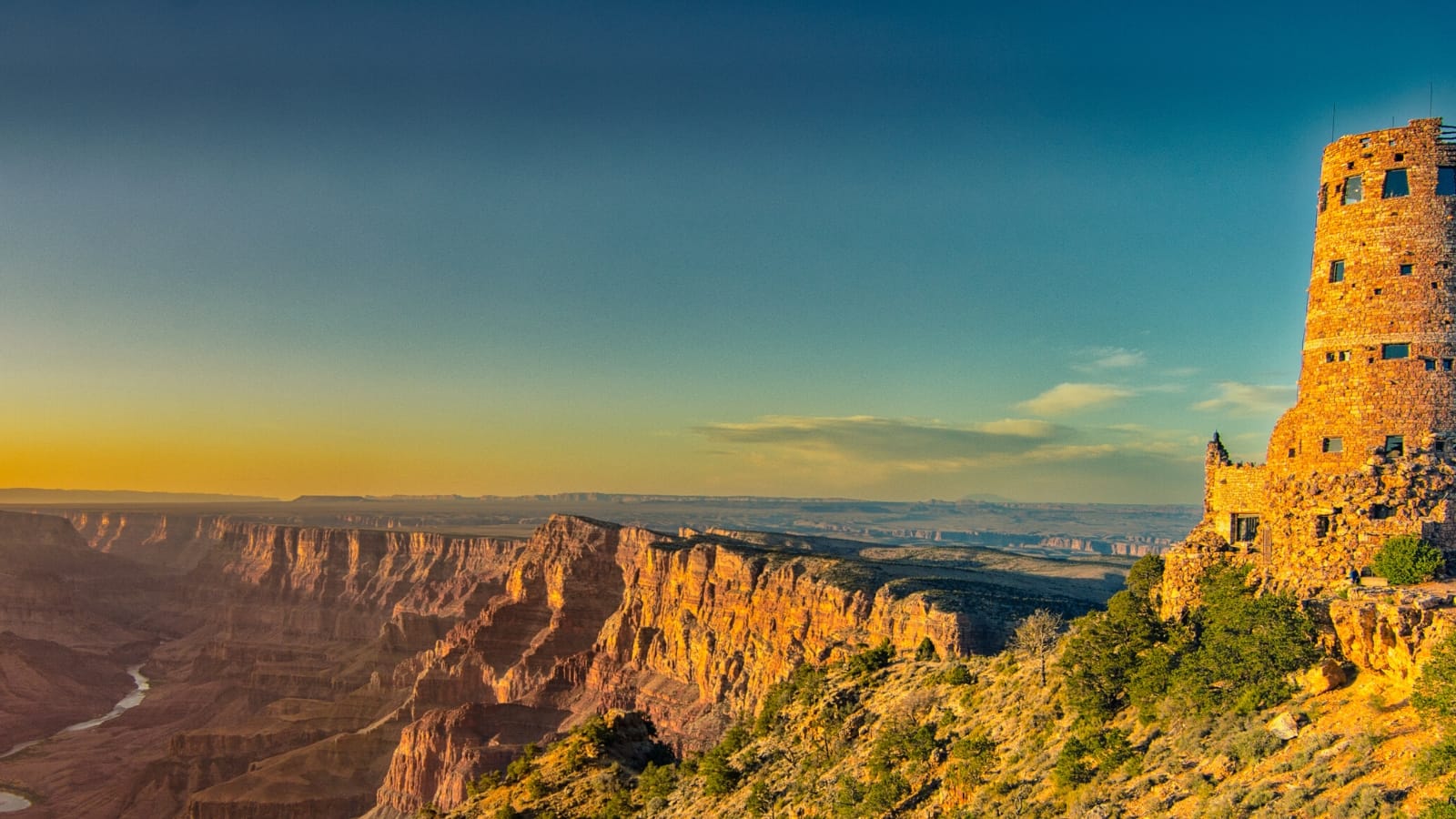
When we enter the park, we are going immediately have the chance to visit one of the most spectacular locations in the entire national park. It’s not just about the view, but the place from where we get to take in those spectacular views.
This place is the Desert View Watchtower. The story about it is also all about the architect, designer and builder who envisioned it and then oversaw its construction. Her name was Mary Jane Elizabeth Colter. Yes, Mary Colter is a woman of course!
This was a highly unusual situation a century ago, and well let’s just make the call that in her day, Mary Colter was the most pioneering female in the male dominated field of architecture, certainly in the US. Female architects were so unaccepted and unproven when she set out in her career, that a male architect had to sign off on her designs and drawings. Whoaahh. Hey, I’m just the messenger here.
To help understand her character she was described as a chain-smoker and that she was a perfectionist.
Mary Colter was responsible for the design and construction of 5 other important buildings at the canyon, and they are all listed as historic landmarks.
In the village itself we will find Hopi House, her first Grand Canyon project from 1905, The Lookout Studio from 1914, and the Bright Angel Lodge which was completed in 1935.
If we take the shuttle to Hermits Rest west of the village, that’s one of hers. And the famous Phantom Ranch cabins at the bottom of the canyon was transformed from canvas tents to something suitable for the new rich breed of tourists who were coming by train.
The common theme in all of her buildings was the desire to blend into the surroundings and to draw from the Native Americans who originally inhabited the area.
By not making her buildings take your eyes away from the scenery, she made them even more special. And yet they were incredibly interesting and appealing designs.
This core concept became the philosophy of many of the National Park’s architecture throughout the country.