00:00

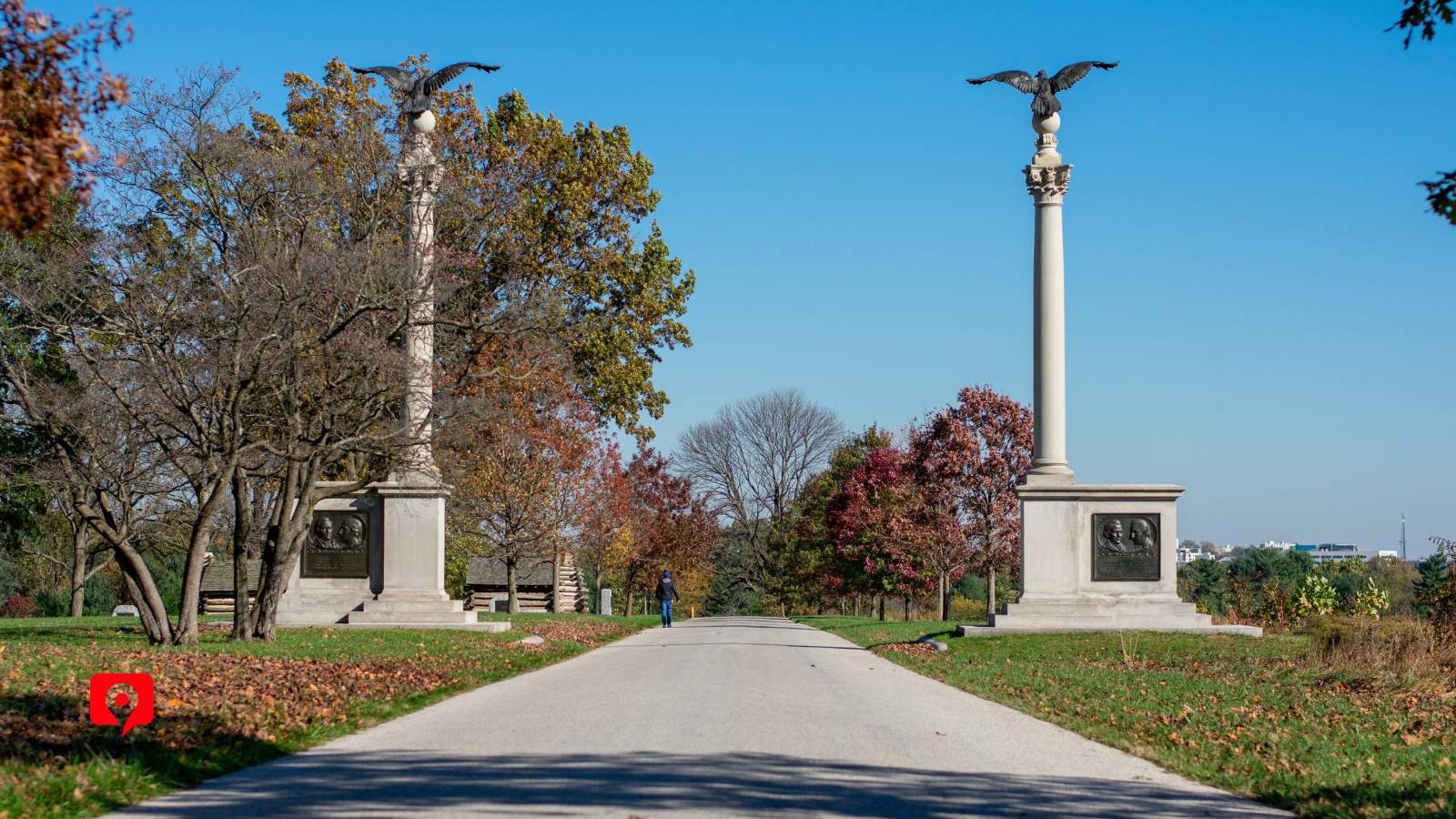
Just 18 miles away from Philadelphia, the Valley Forge National Historical Park preserves the site of the 1777-78 winter encampment. It was here that Washington’s Continental Army trained and kept an eye on the British camped in the state capital. Nearly 14,000 people lived in the camp over the course of the year, and at least 2,000 perished from disease and poor supplies.
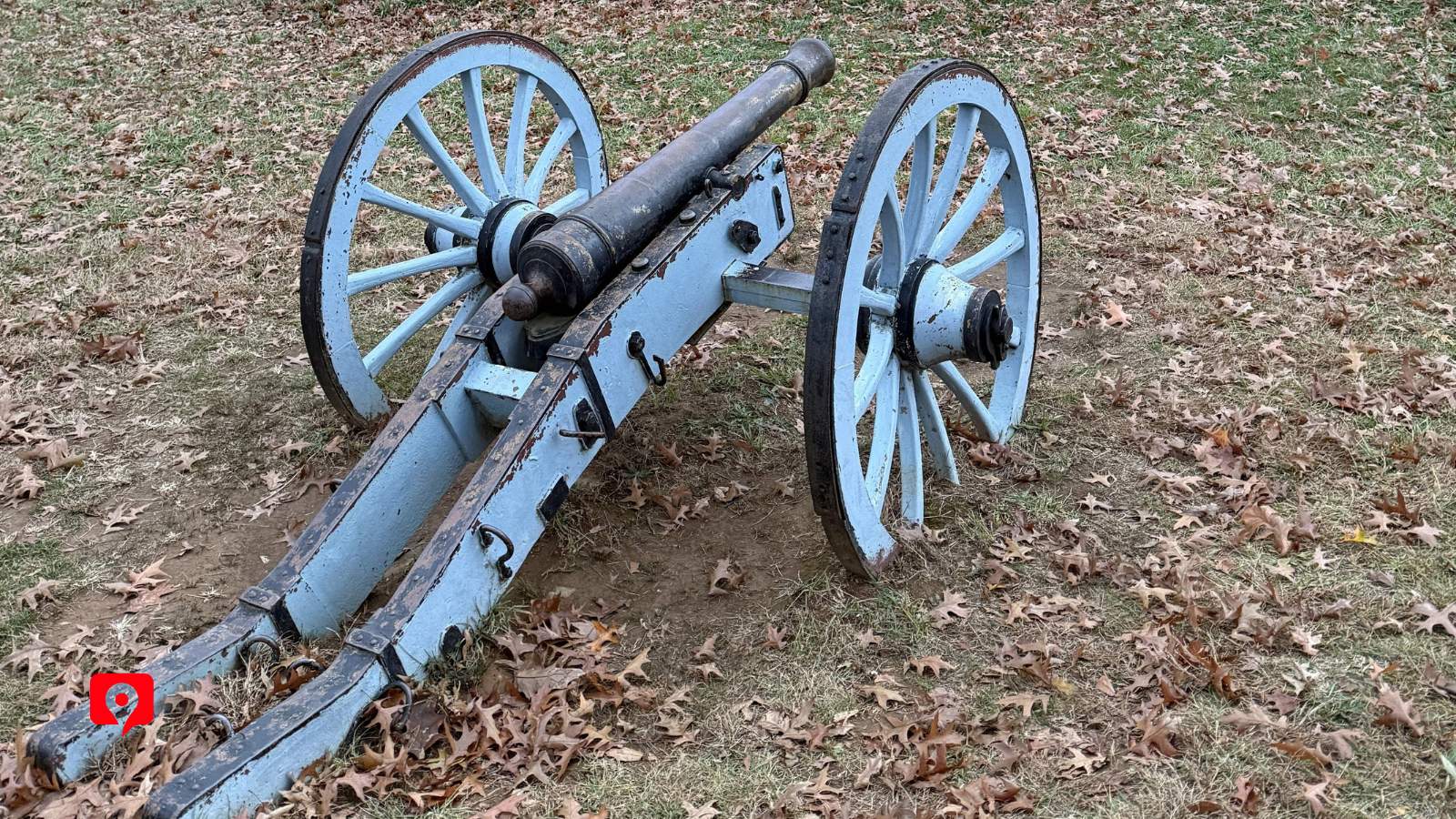
Today, the park features recreations of the soldiers’ cabins, the fortified earthworks they built and patrolled, Washington’s Headquarters, and the cannons overseen by General Henry Knox. Visitors can drive through the park to see key sites from the encampment, along with the many memorials dedicated to people like Generals Anthony Wayne and Baron von Steuben, as well as the ordinary soldiers under their command. The Visitor Center displays artifacts from the Revolution, while buildings like nearby Washington’s Chapel connect past and present.
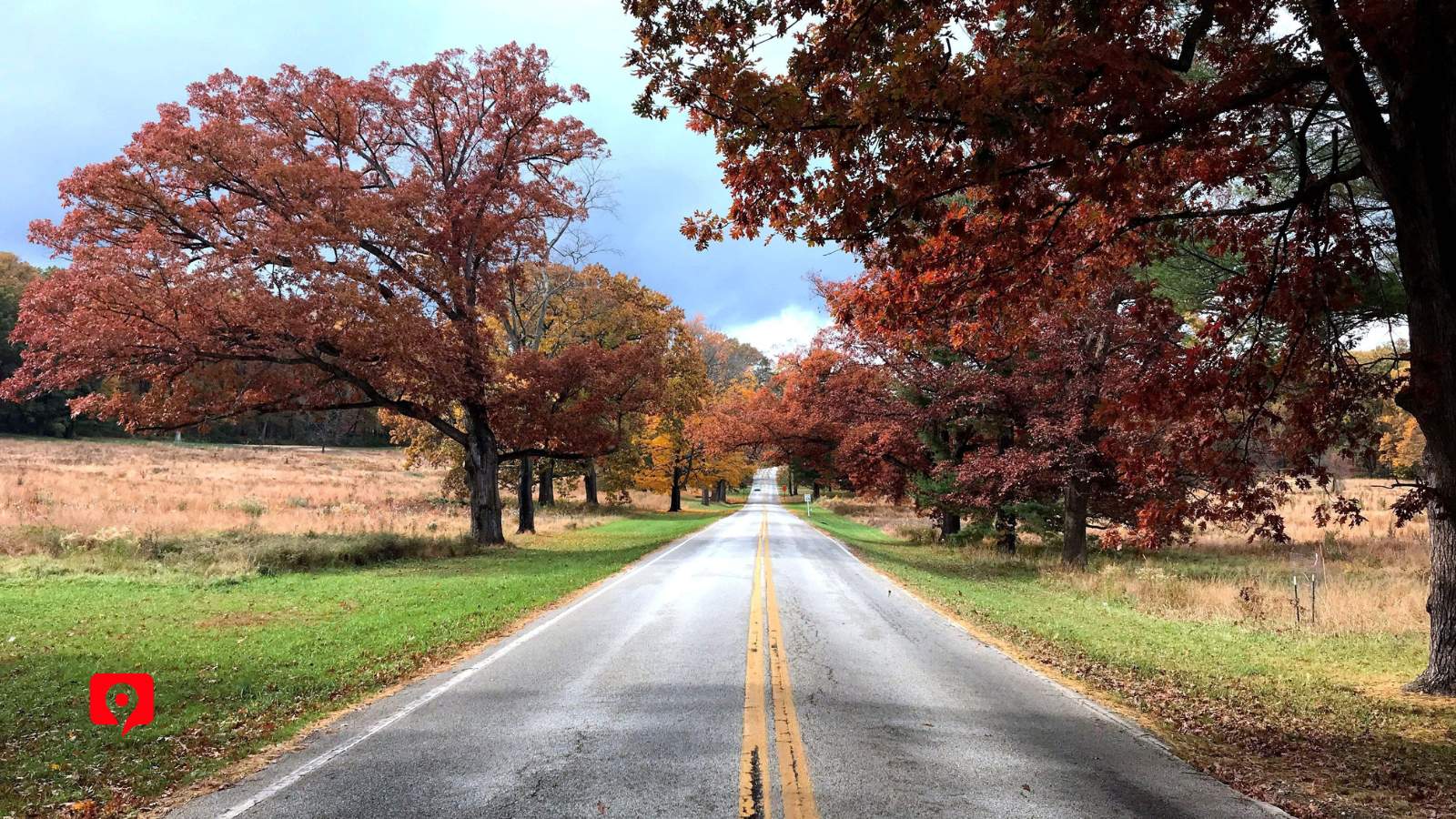
Valley Forge National Historical Park is easy to reach from Philadelphia and other major cities in the Northeast. Approaching from Philadelphia or points east, take I-76 West, then follow US Route 422 West to Route 23 West/Valley Forge.Approaching from Harrisburg, Pittsburgh, or points west, take the Pennsylvania Turnpike (I-76) to Exit 320 for Valley Forge. Then, follow signs for Valley Forge along Whitehorse Road and Valley Park Road.

The closest major airport is the Philadelphia International Airport (PHL), about a 45-minute drive away from the Valley Forge National Historical Park.Rent a car at the airport and continue to the park via I-95 S and I-476, then take Exit 13 from I-476 and continue onto US Route 422 West to Route 23 West/Valley Forge.
The Valley Forge National Historical Park is free to visit. There are no parking charges at the Visitor’s Center or at individual monuments or historic sites within the park.
King of Prussia is the closest town to the Valley Forge National Historical Park and offers many hotel and short-term rental options. There is also the large King of Prussia Mall, which many travelers like to visit after their trip through the park.Staying in the Philadelphia area lets you combine a day trip to Valley Forge with a larger city trip. It takes between 30 and 45 minutes to drive from Philadelphia to Valley Forge, depending on where you’re staying in the city.There is no overnight camping allowed at Valley Forge.

You can visit the Valley Forge National Historical Park year-round. Summer and fall offer the most living history programs through the National Park Service, though summer is hot and humid and tends to have more insects. Spring and fall offer cooler temperatures and fewer crowds, so it can be a more comfortable way to explore the historic sites. Winter tends to be cold and muddy, but if you avoid rain and snow, you can still enjoy the park.The park grounds are open from 7 a.m. until half an hour past sunset daily. We recommend arriving early enough to see the Visitor Center, which is open from 9 am-5 pm daily.
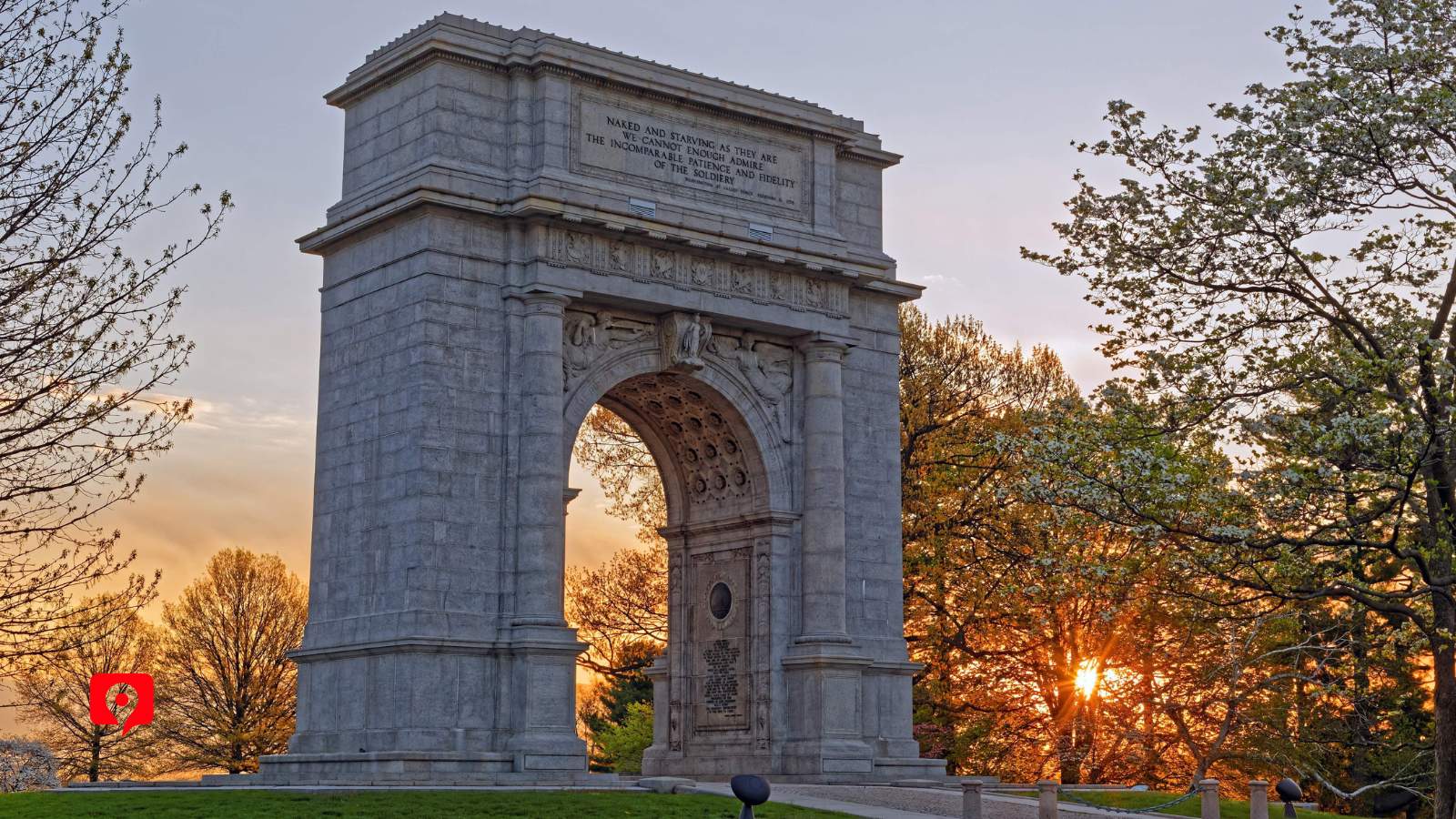
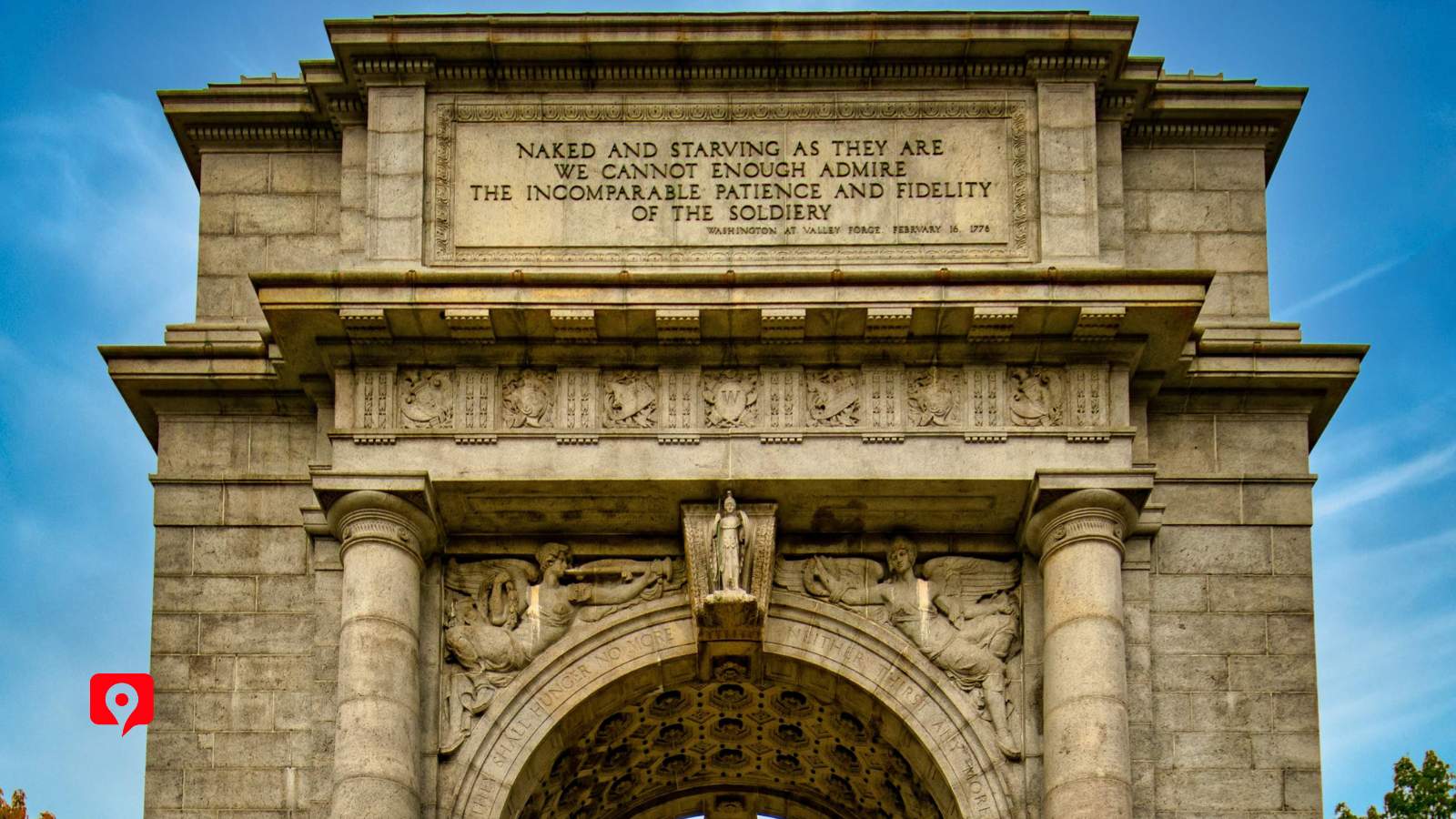
By far the largest monument in the entire park, the National Memorial Arch honors George Washington and his men who endured hardship here at Valley Forge during the winter of 1777-78. Designed in the classical style, the Arch was modeled after the Arch of Titus in Rome. It stands as a reminder of the soldiers’ endurance in the face of hardship.
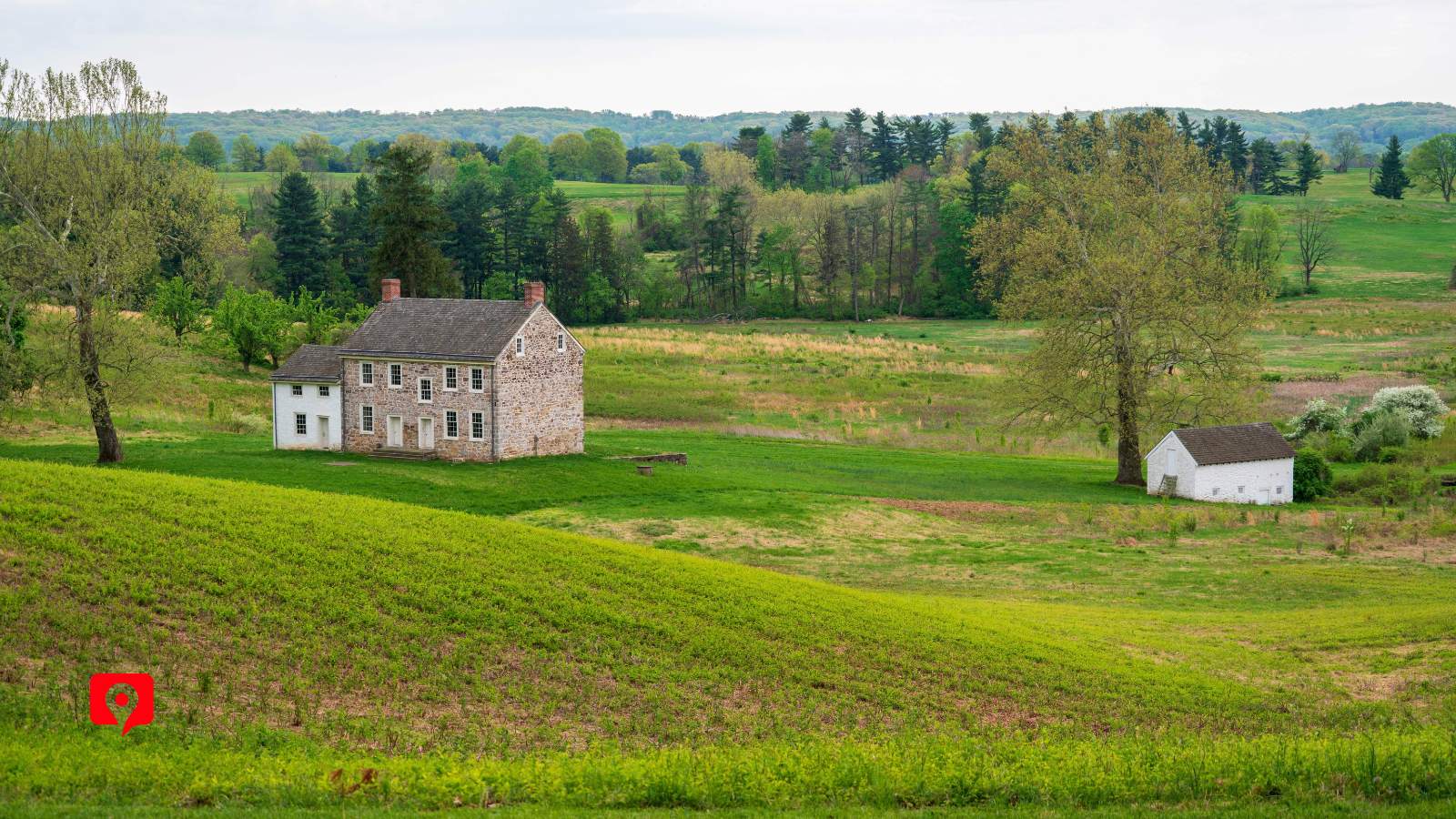
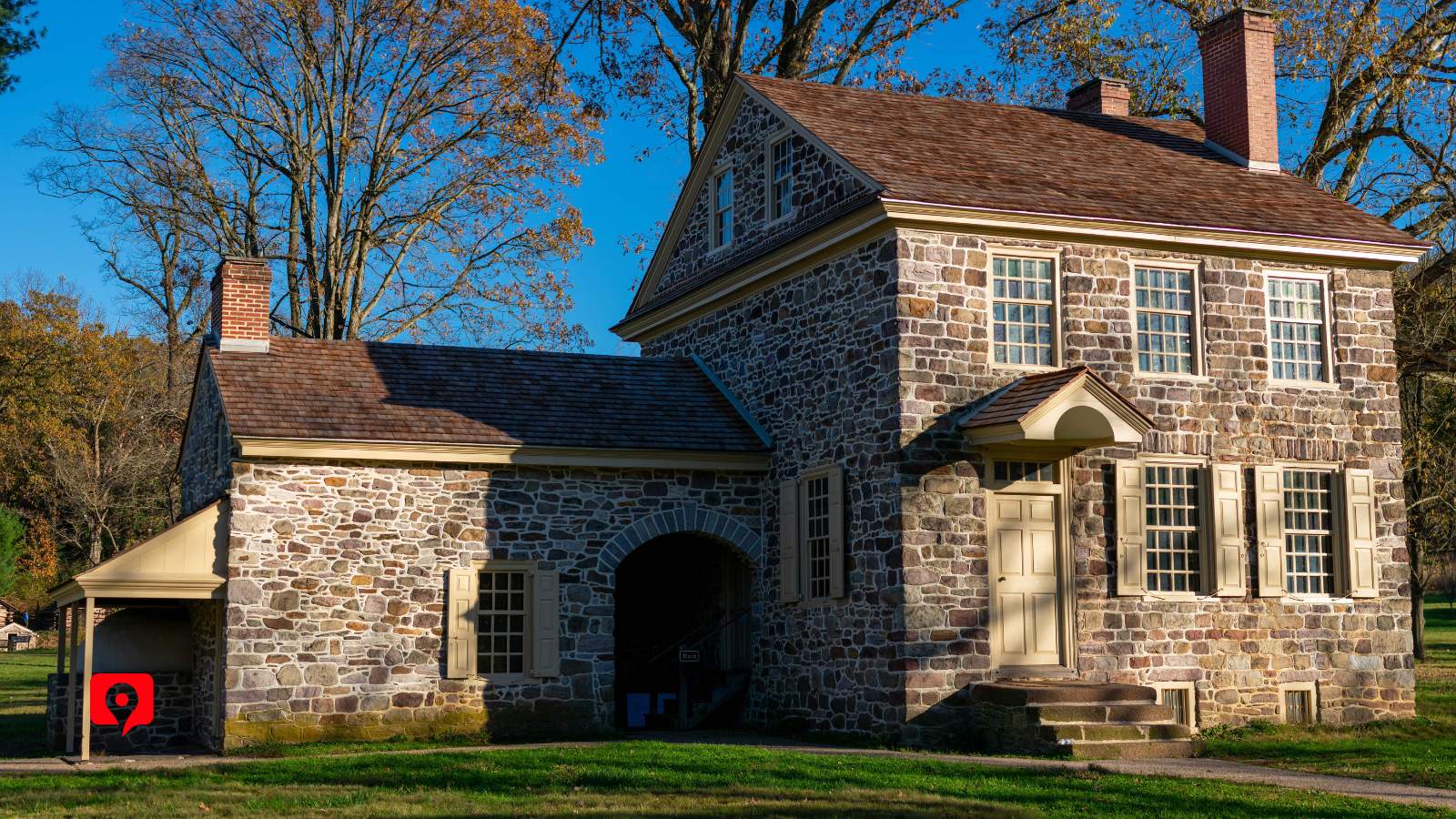
The simple stone house belonging to Isaac Potts was used by General Washington and his staff, including John Laurens and Alexander Hamilton, during the winter encampment. It was here that Washington struggled to secure supplies for his men, recruited officers to his cause, oversaw training and defense, and corresponded with Congress.
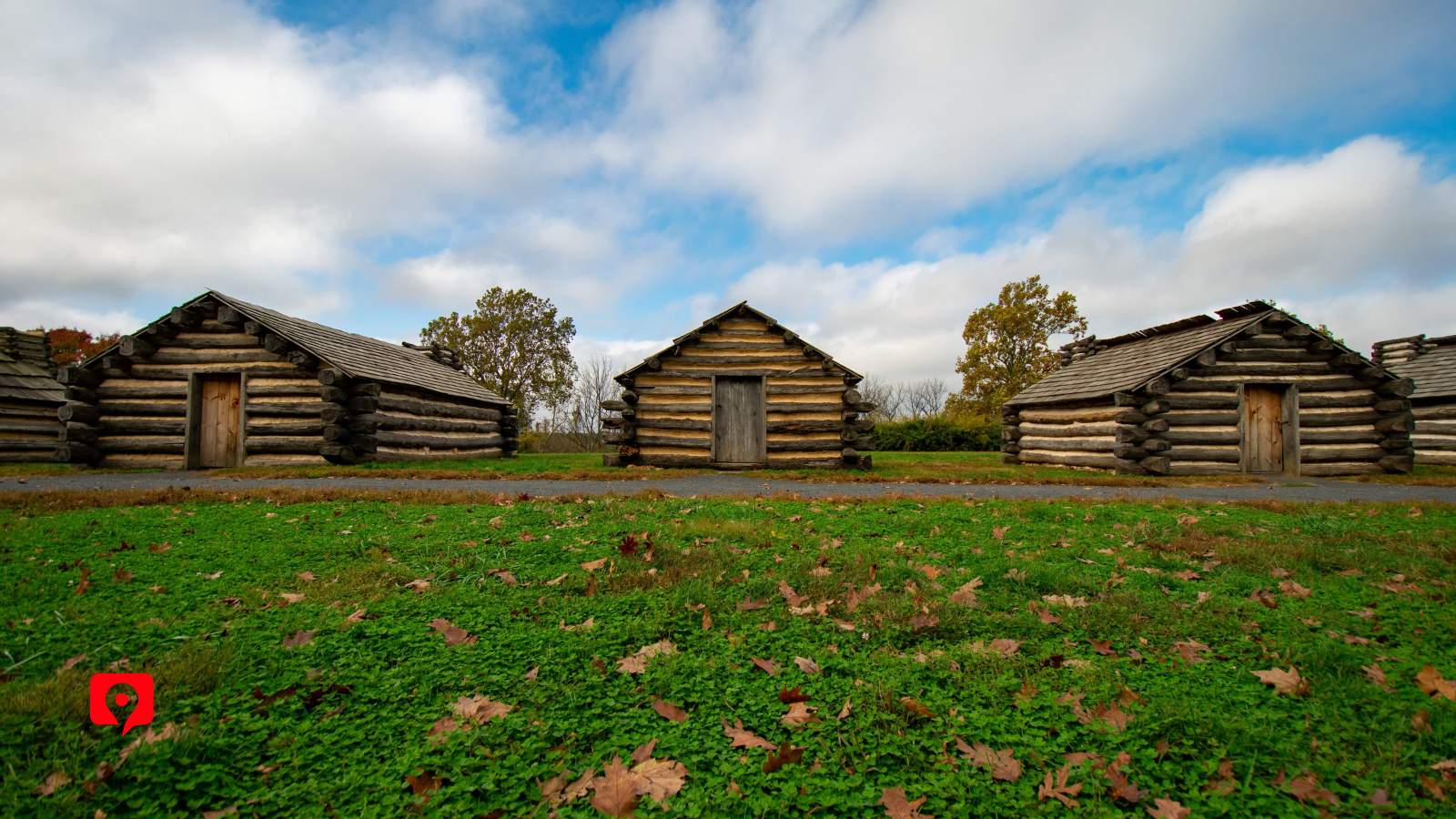
These recreated cabins show what living conditions were like for ordinary soldiers during the winter of 1777-78. It was here that General “Devil Pete” Muhlenberg’s Brigade camped when they arrived at Valley Forge, only to face a winter with few provisions, insufficient uniforms, and the constant threat of disease.
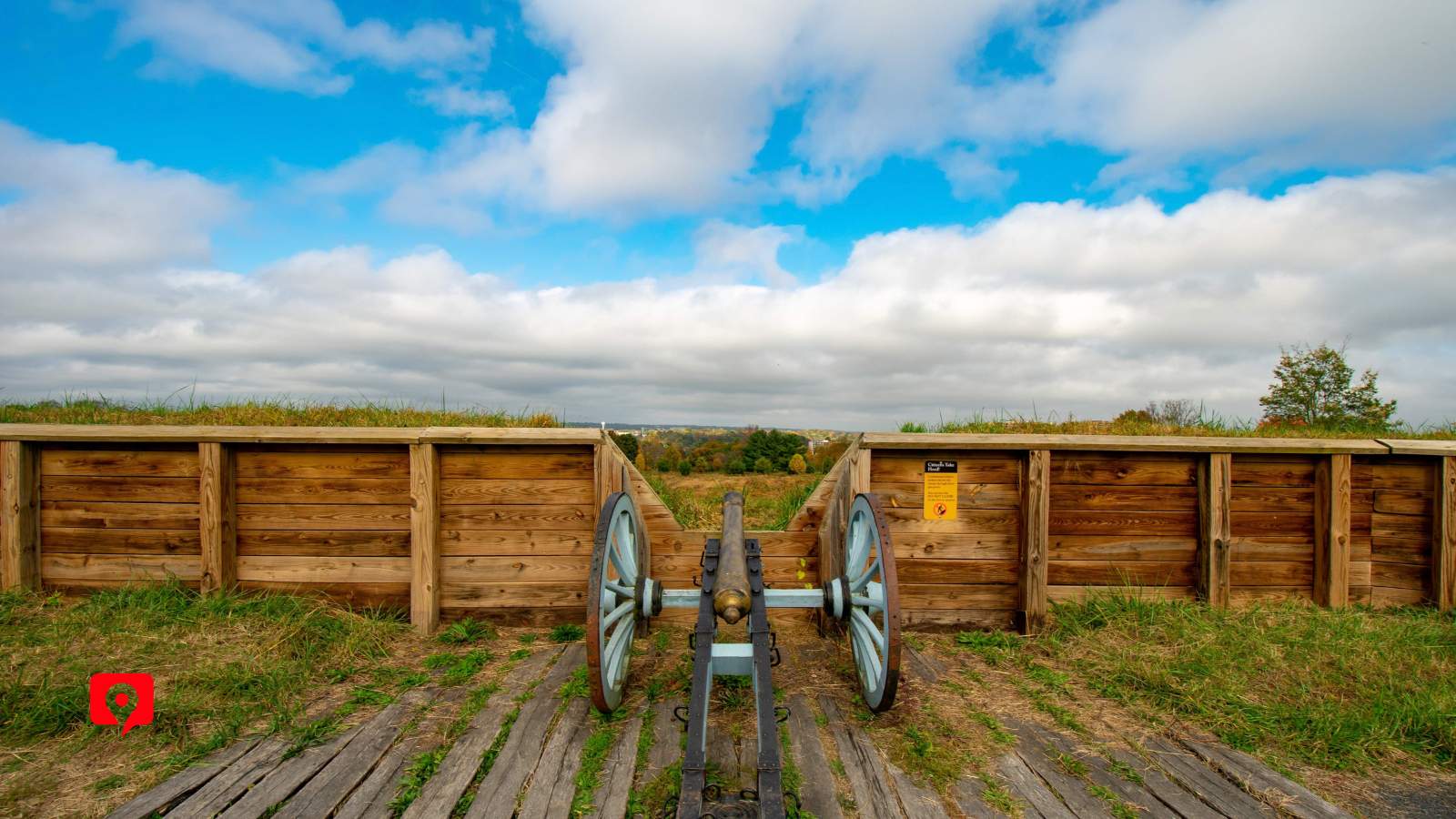
Near the soldiers’ cabins, a reconstructed redoubt shows the kind of earthwork fortification that the American soldiers built and patrolled. These structures reinforced the strong position along the Schuylkill River that Washington chose to protect his men. Though the British never attacked Valley Forge, the threat was ever-present.
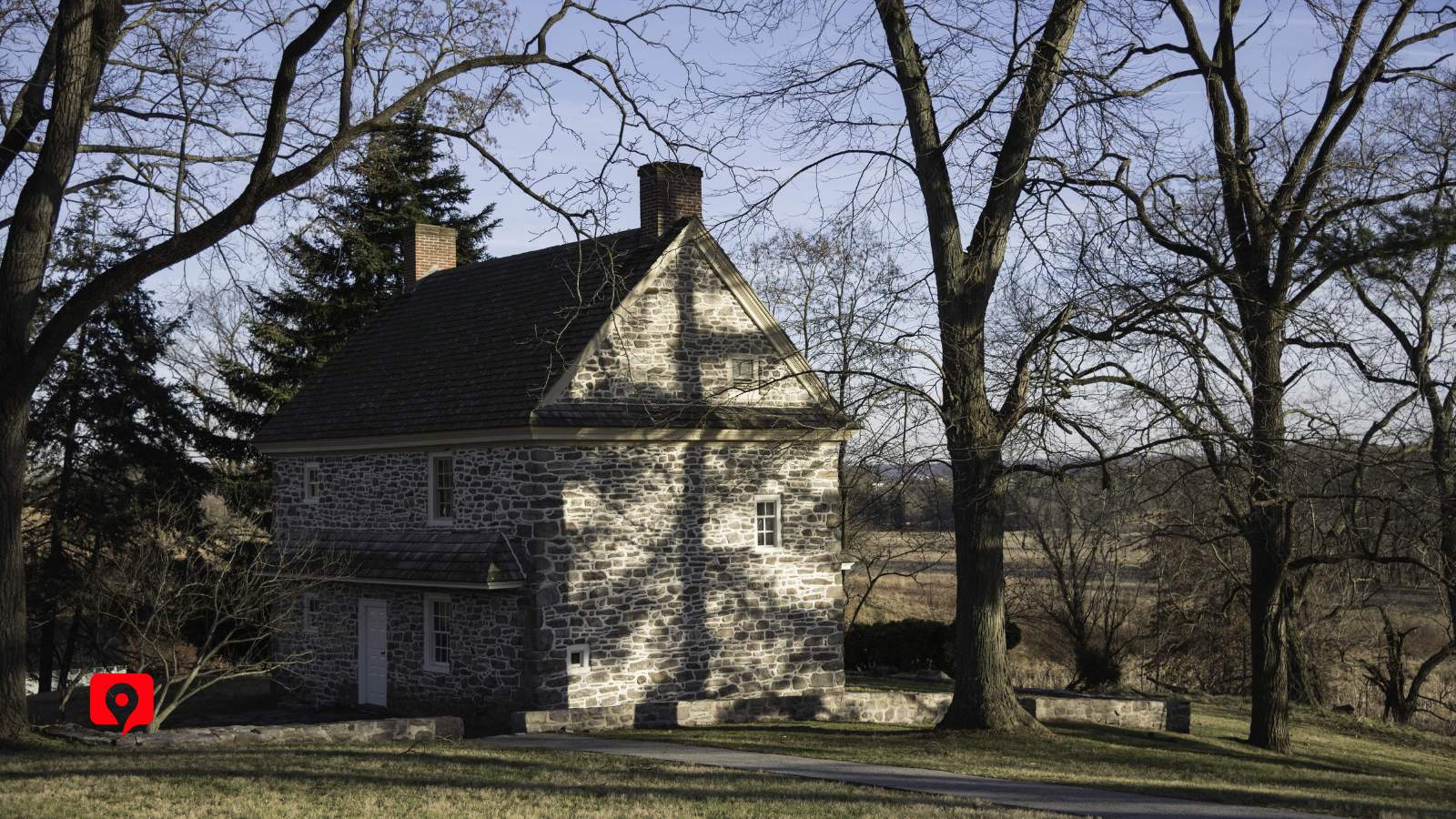
See the stone farmhouse where one of Washington’s closest advisors spent the winter. General James Mitchell Varnum worked closely with Nathaniel Greene. Varnum was the one who originally proposed combining the undermanned Rhode Island militias and recruiting enslaved men in exchange for their freedom, resulting in the famous interracial 1st Rhode Island Regiment.
Immediately adjacent to the Valley Forge National Historical Park, the Washington Memorial Chapel was built between 1903 and 1917 in the impressive Gothic Revival style. Step inside to see the 13 stained-glass windows, where the intricate artwork tells theological and historical stories. Look for famous figures like George and Martha Washington and Alexander Hamilton pictured in the windows here.
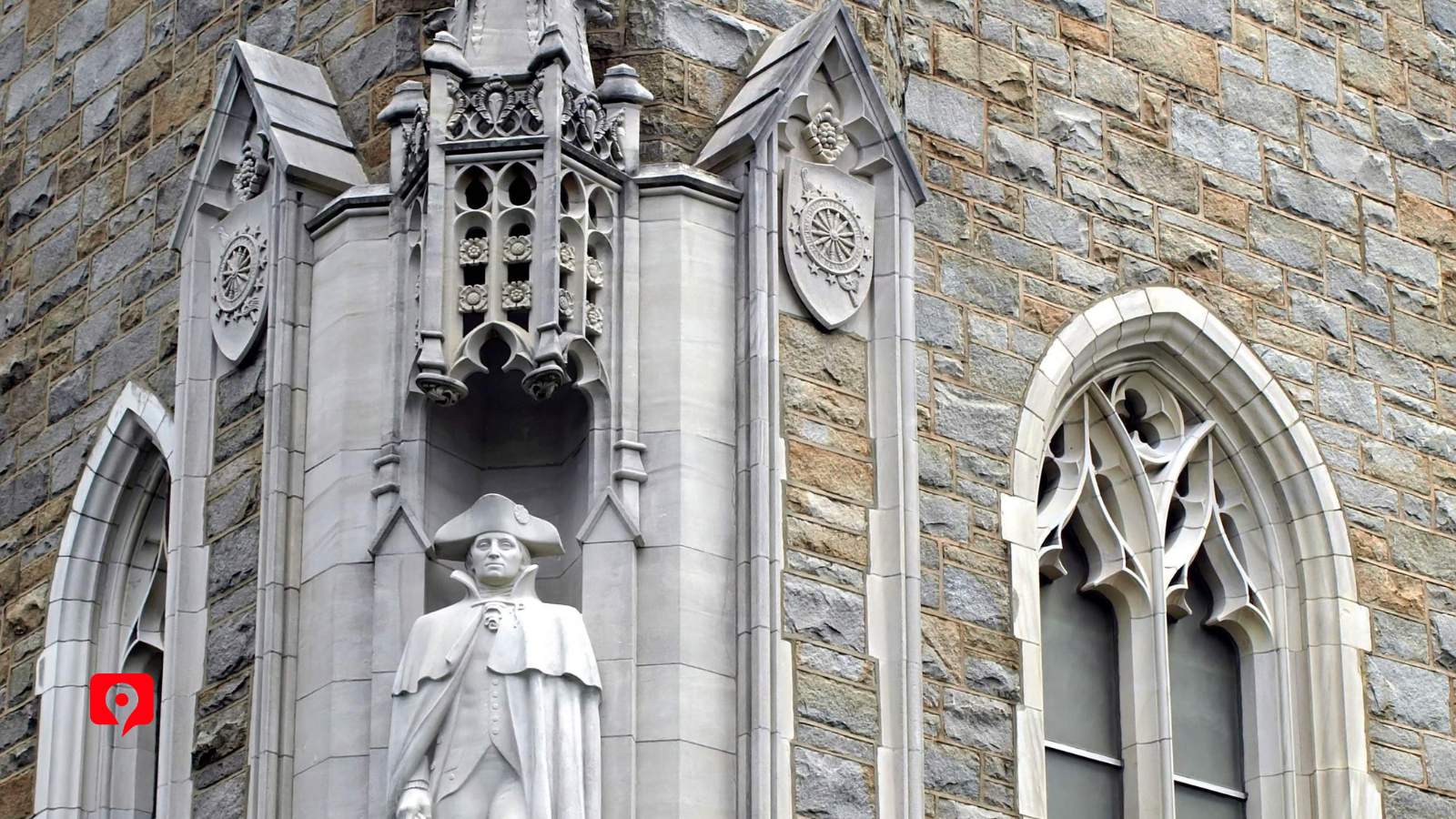
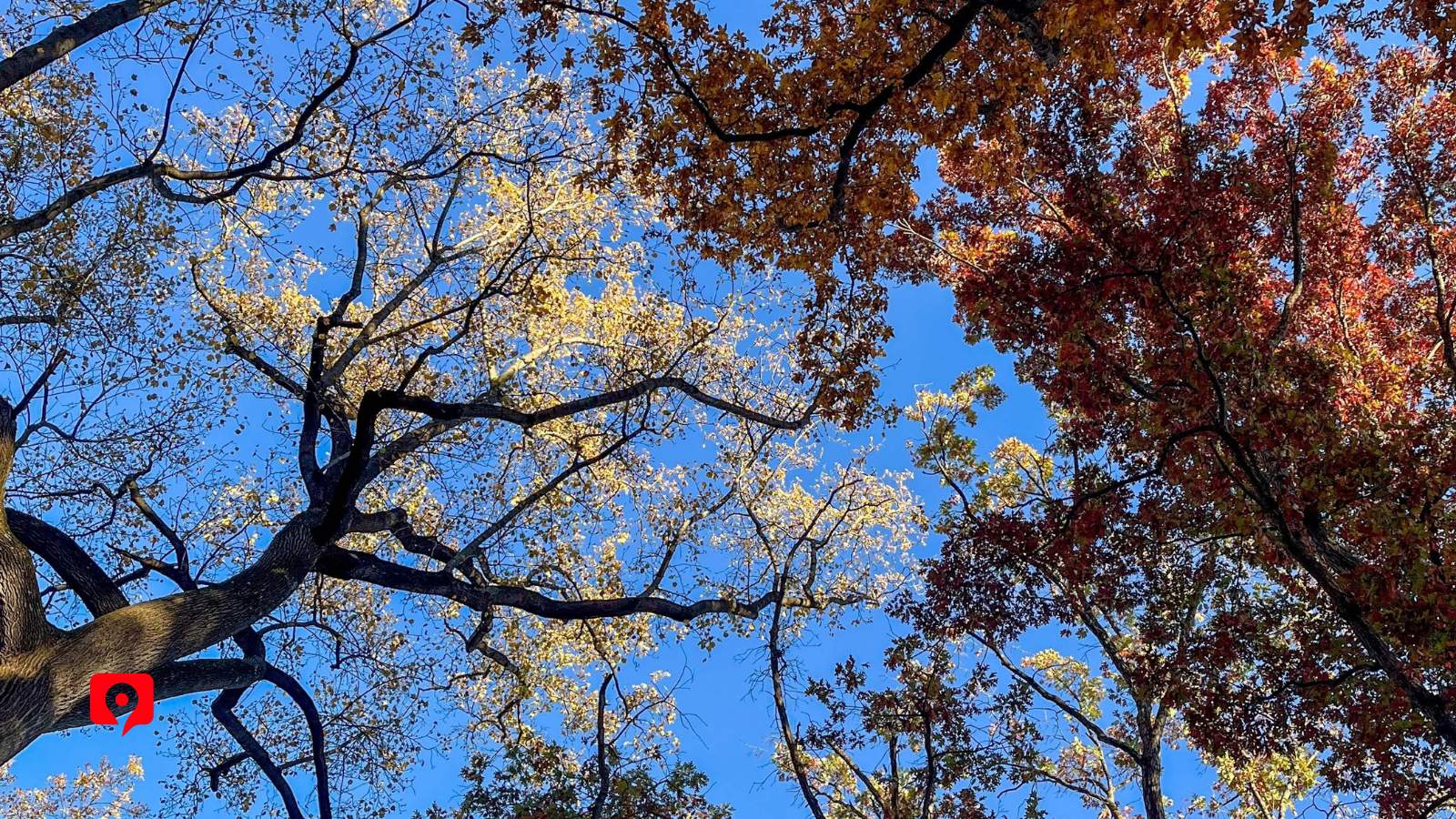
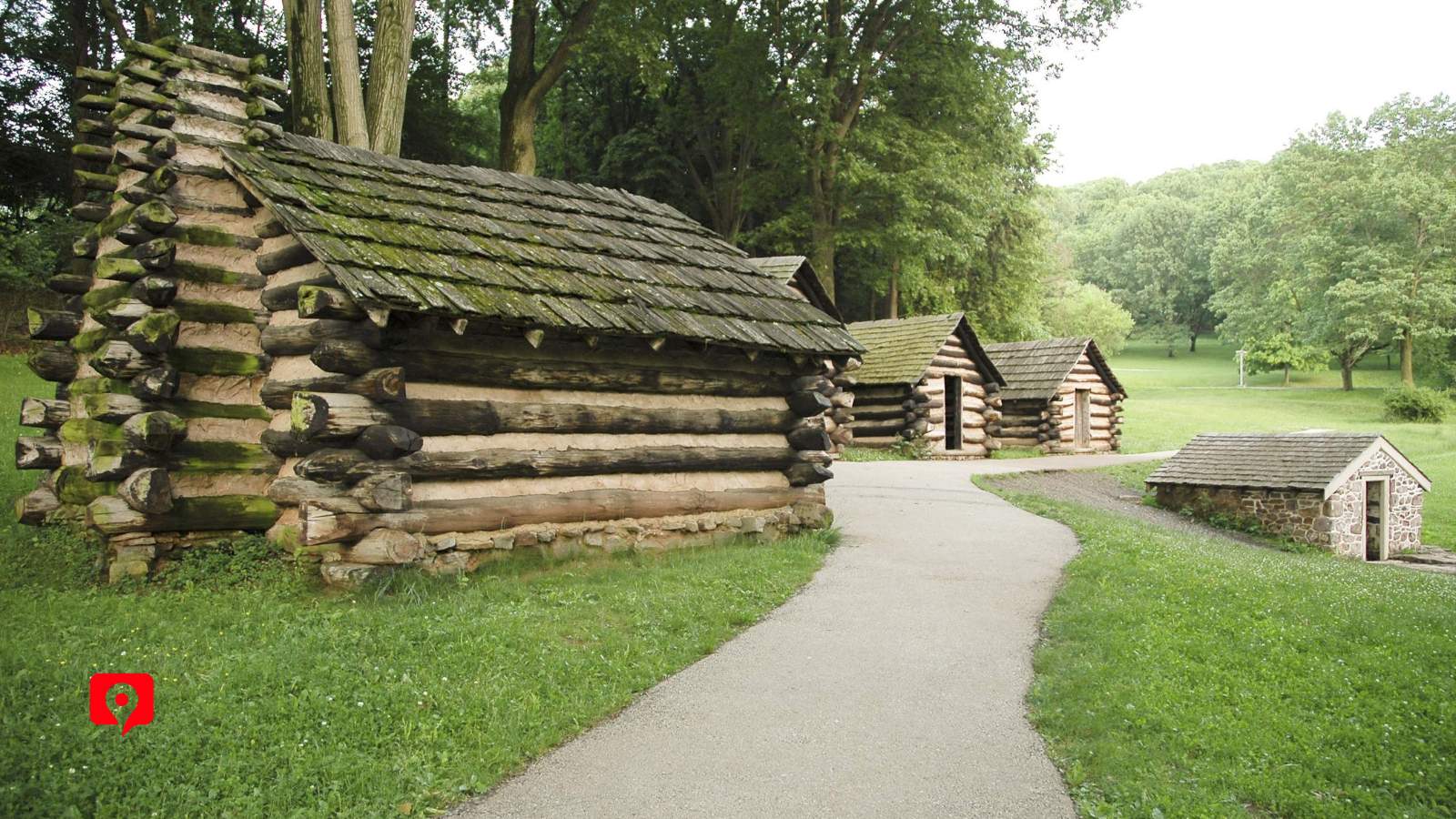
This 10-mile driving tour of Valley Forge can be completed in a single morning or afternoon, with time for favorite stops like the Grand Memorial Arch, the soldiers’ huts, Knox’s Headquarters, the General Anthony Wayne Statue, and Washington’s Headquarters. This also gives you enough time to explore the exhibits inside the Valley Forge Visitor Center.This trip combines well with other historic sites in the area, like Philadelphia and Harrisburg. Gettysburg is only a two-hour drive away.
Half-Day Itinerary
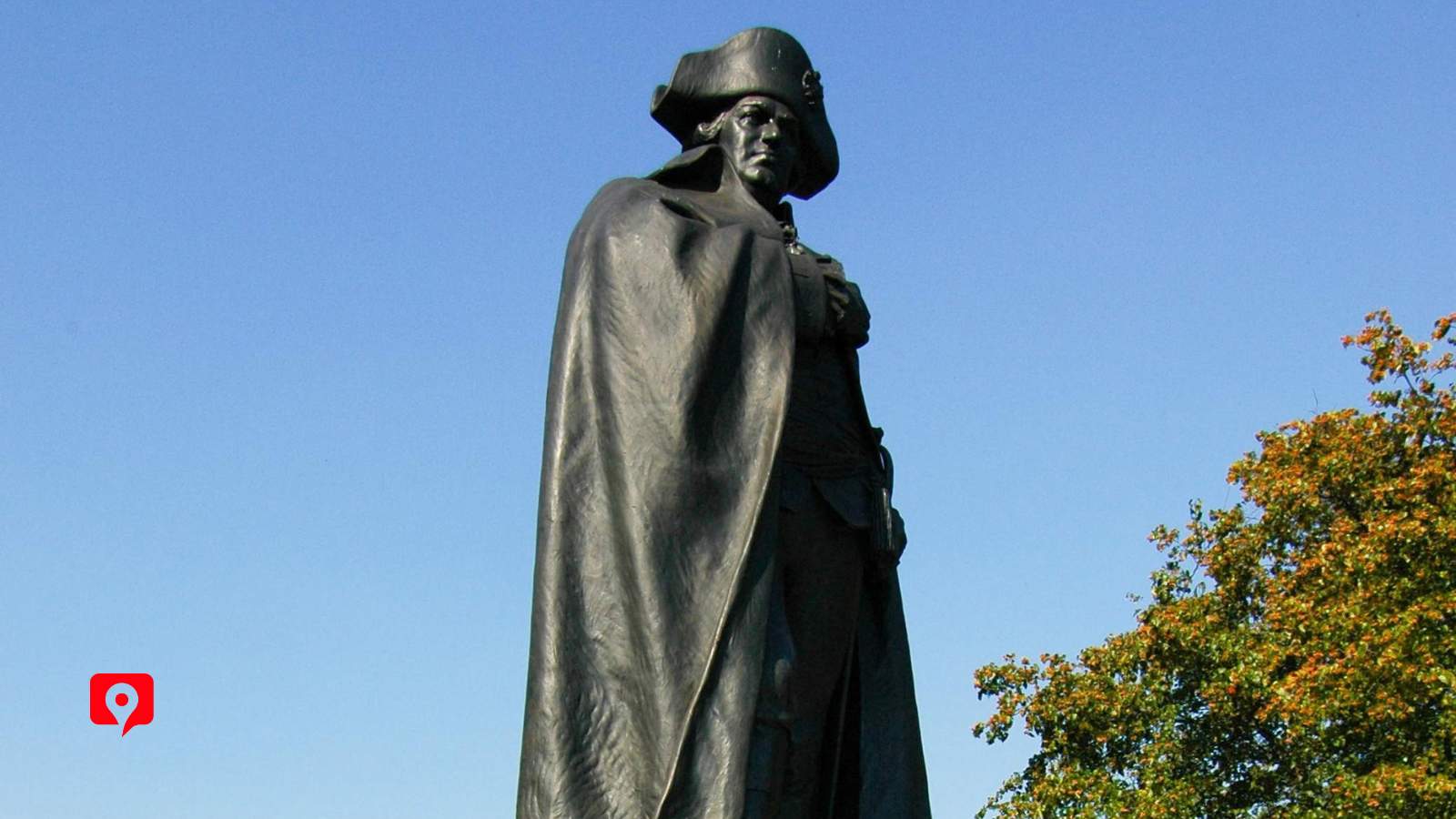
You can complete this 10-mile driving tour of the Valley Forge National Historical Park in a single morning or afternoon, leaving you plenty of time to explore other historic sites around Pennsylvania. Start the tour along Route 422 or West Valley Forge Road, or pick up the commentary anywhere along the route. This trip is designed to be flexible – you can start in the middle, repeat favorite stops, or simply drive past ones that don’t match your schedule.
Here’s a suggested itinerary for either a half-day or full day at Valley Forge:
Half-Day Itinerary
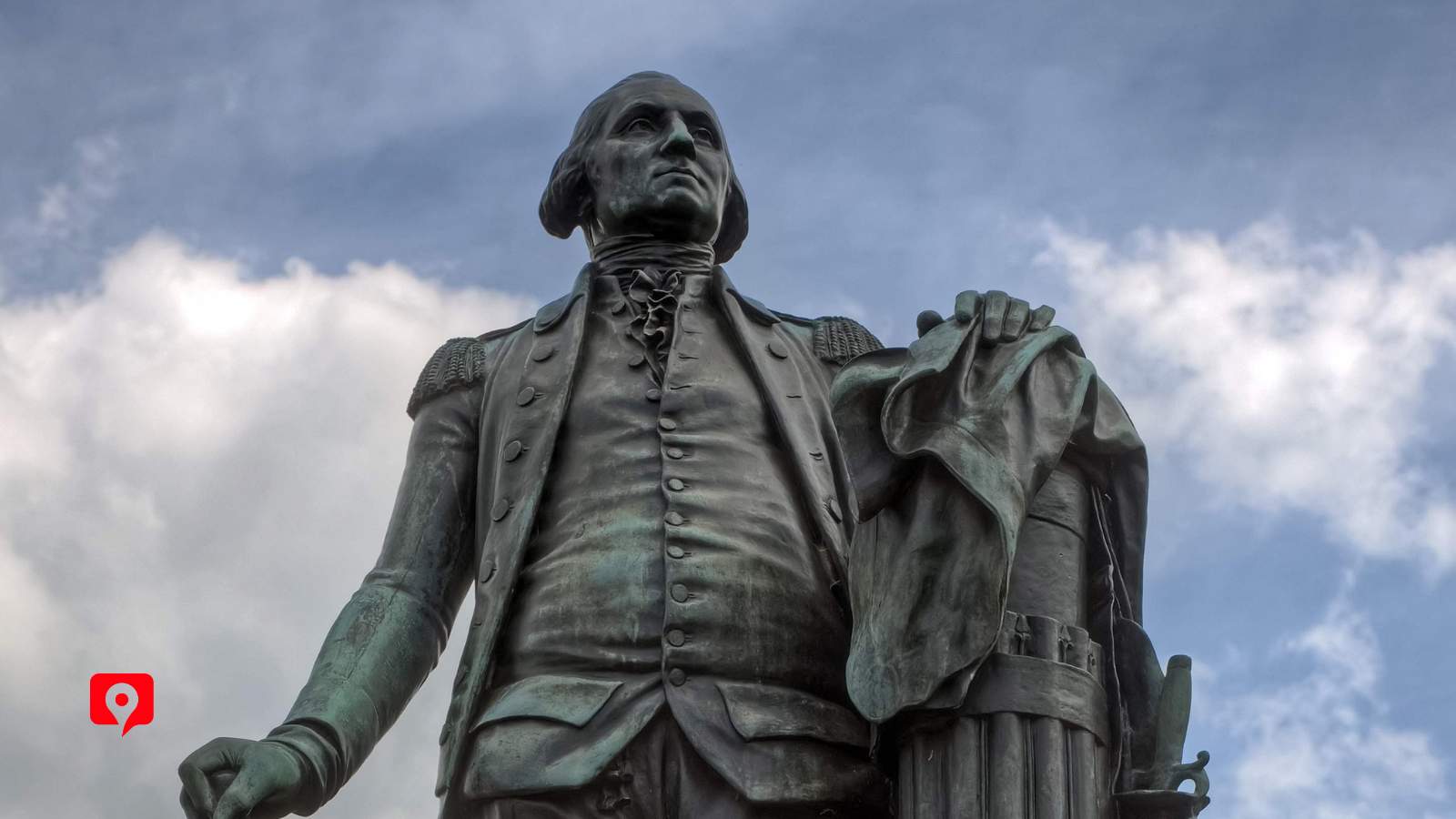
Begin the tour from any of our recommended starting points. Take the short side path down to the soldiers’ cabins and Redoubt #2 to get a look at everyday conditions in the winter of 77-78. Then, drive past the Maine Memorial and the National Memorial Arch, where you’ll want to pull into the roadside parking area to grab a photo. The expert commentary will share the background behind the Anthony Wayne Statue and the Unknown Soldier Memorial as you pass by, then show you where you can park if you want to see General Henry Knox’s quarters. We’ll point out the Delaware Memorial and the Valley Forge Train Station as we wind through the park, then park once more to see three sites related to General Washington – his Headquarters, his Monument, and the huts where his bodyguards lived. We’ll make one more stop at the Artillery Park, since there are around a dozen reproduction cannons to see here, before we finish the driving loop near the Visitor Center.
Full-Day Itinerary
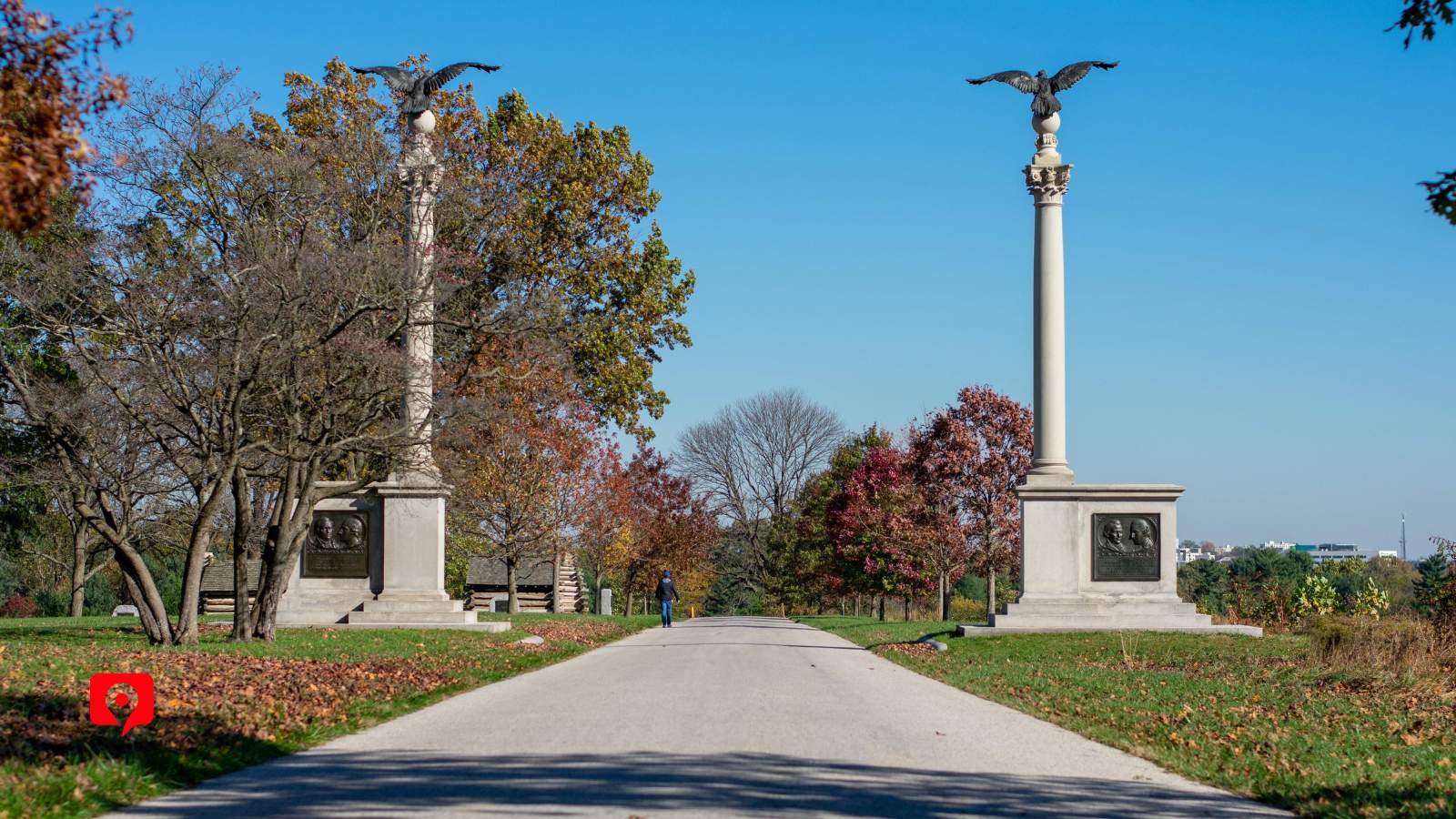
If you have a full day to spend in Valley Forge, you can stop at a few more of the historic sites the commentary points out along the route. The Redoubt Overlook gives an additional view of the fortifications and is a good stop for folks who enjoy military history. A little further down the path from Knox’s Headquarters, you can see the Philander Chase Knox Estate, which is a beautiful historic mansion that’s neat to walk by. This also gives you enough time to go inside the Valley Forge Train Station, which is now a museum with a recreated historic train station inside and displays about the 1777-78 encampment here. Though technically not part of the National Park, the Washington Memorial Chapel features beautiful Gothic Revival architecture and 13 stained glass installations inside that you might want to stop in and see. The Visitor Center has films and displays as well, so there’s plenty of reasons to take your time at Valley Forge.

Pack a DC Charger: Using location services will drain your battery faster, so bring a 12V DC charger to keep your phone charged throughout the day.
Sun Protection: Many of the historic spots along the route have limited shade. Bring sunscreen, a sun hat, and sunglasses to stay protected from sunburn during summertime visits.
Full Water Bottle: It’s important to stay hydrated along any walking tour, especially during the warmer summer months. Starting the day with a full water bottle will sustain walkers through the tour of Valley Forge.
Layers: Since Valley Forge is open year-round, pack weather-appropriate layers that can handle the cold, breezy temperatures of late fall through early spring, if that’s when you plan to visit. If visiting during the warmer months, pack lightweight, breathable clothing that’s comfortable in high humidity.
Comfortable Walking Shoes: Pack comfortable shoes to explore the historic sites around Valley Forge. There are hiking trails within the park, and it is also popular with runners, so pack the footwear you need for your preferred activities.
Snacks or a Picnic: There are no indoor dining facilities or restaurants inside Valley Forge Historical Park, but there are several picnic spots at Varnum’s Quarters, Wayne’s Woods Picnic Area, and across the Schuylkill River at Betzwood Picnic Area. Remember to leave no trace.