00:00

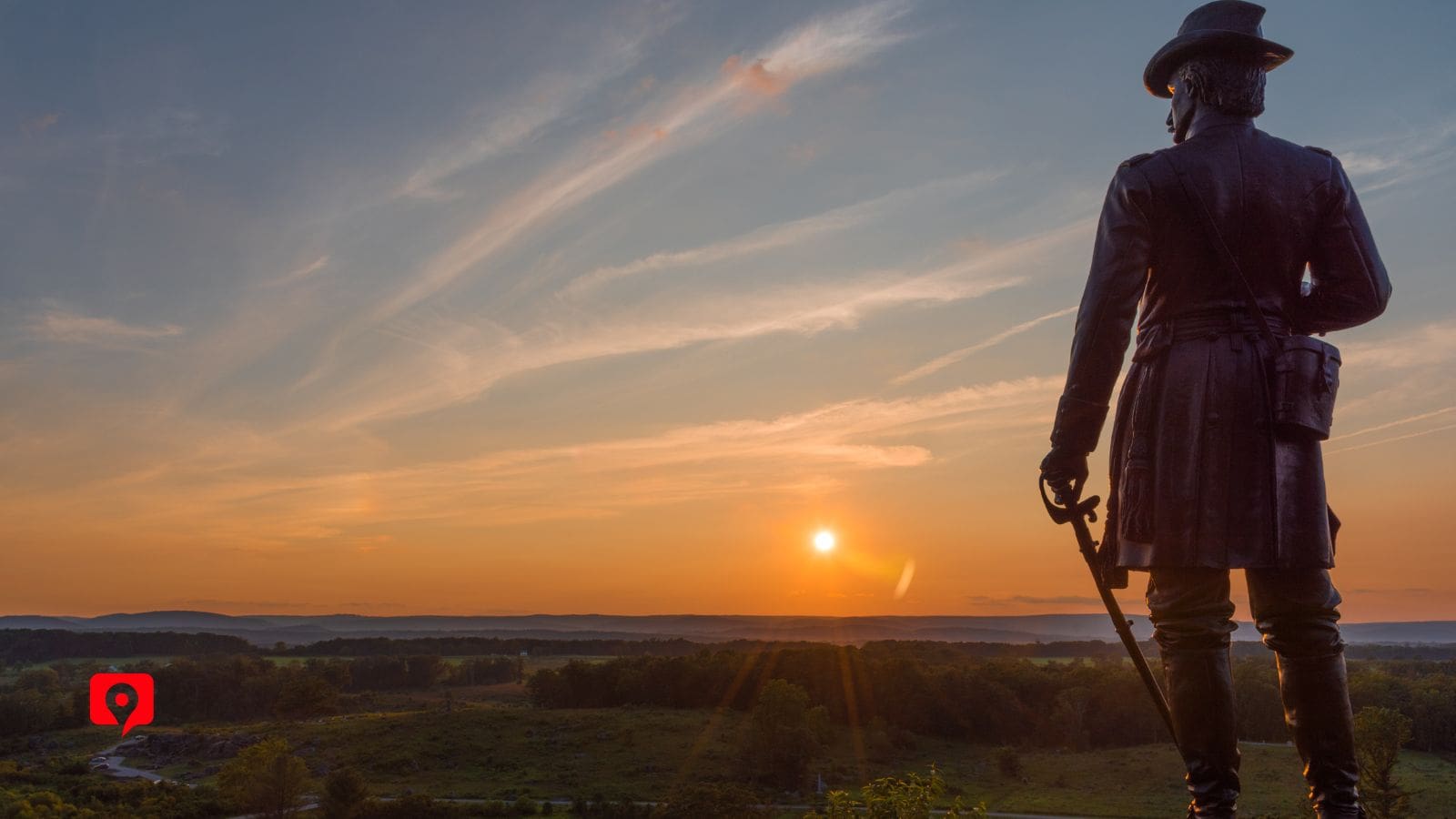
Near a small town in Pennsylvania lies the Gettysburg Battlefield, the site of the most pivotal battle of the American Civil War. Over three summer days in July 1863, Union and Confederate forces clashed here in a fight that would determine the fate of the nation. Nearly 50,000 soldiers were killed, wounded, or missing, making it the war’s bloodiest battle. It’s also the site of Lincoln’s famous Gettysburg Address, where he rallied the nation with his powerful speech.
Today, Gettysburg National Military Park preserves these hallowed grounds, where open fields, stone walls, and historic farmhouses still tell the story of sacrifice and courage. You can drive the battlefield roads, stand where soldiers once fought, climb observation towers for sweeping views, and visit iconic landmarks like Little Round Top, Devils Den, and Pickett’s Charge.
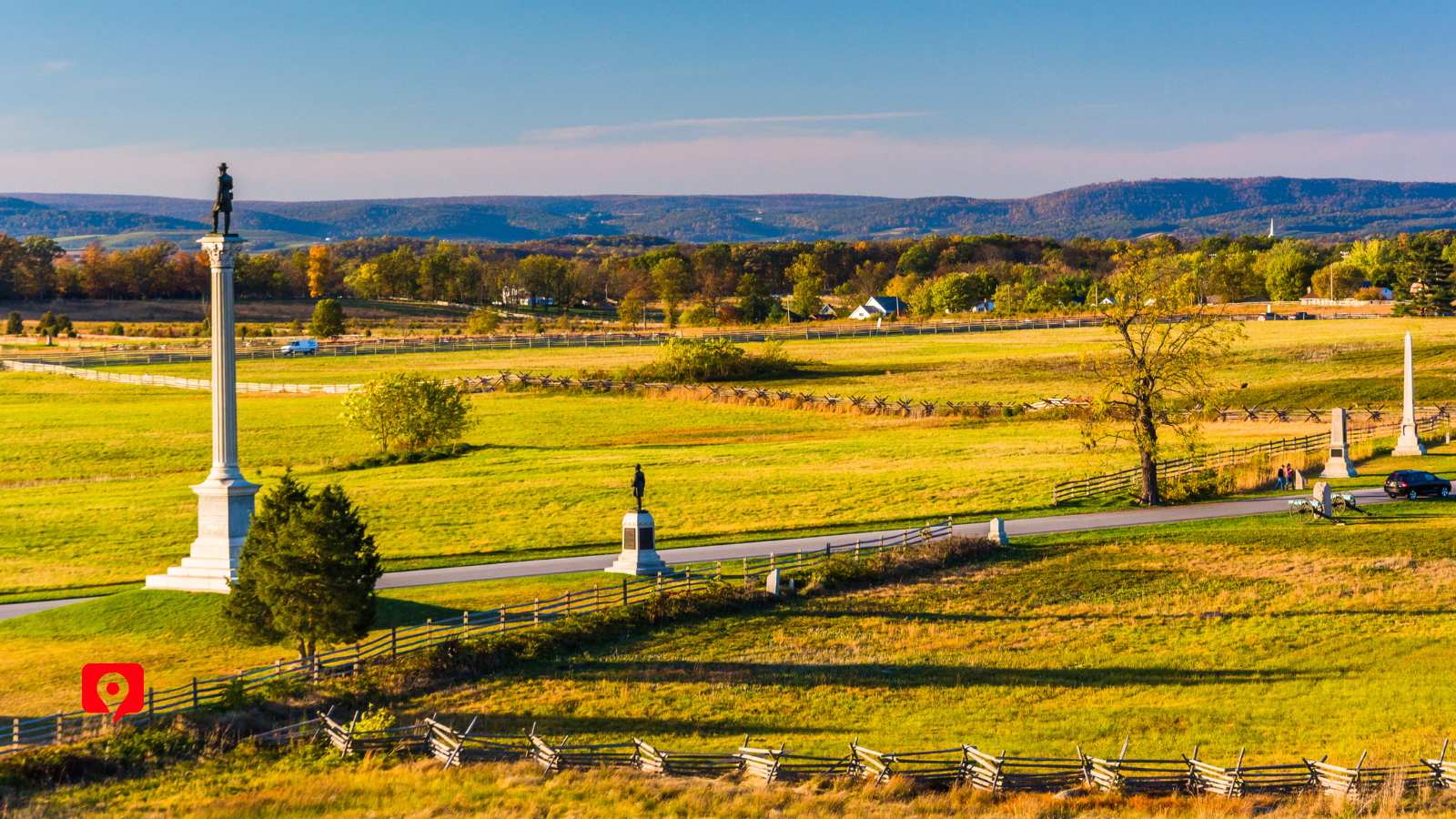
Gettysburg Battlefield sits in the rolling countryside of southern Pennsylvania, about 80 miles north of Washington, D.C., and 40 miles south of Harrisburg. The easiest and most rewarding way to explore the battlefield is by car, following the official Driving Tour route.

Harrisburg International Airport (MDT) is your most convenient option. Located just 35 miles away, it is a quick 55-minute drive with rental cars readily available on-site. For a wider selection of airlines and flight times, Baltimore/Washington International Thurgood Marshall Airport (BWI) is the closest major hub, located about an hour and a half away.
Depending on your travel plans, you might also consider other major regional hubs. Both Washington Dulles (IAD) and Ronald Reagan Washington National (DCA) are roughly a 1-hour and 50-minute drive. Philadelphia International Airport (PHL) is the furthest major option, typically taking about 2 hours and 50 minutes.
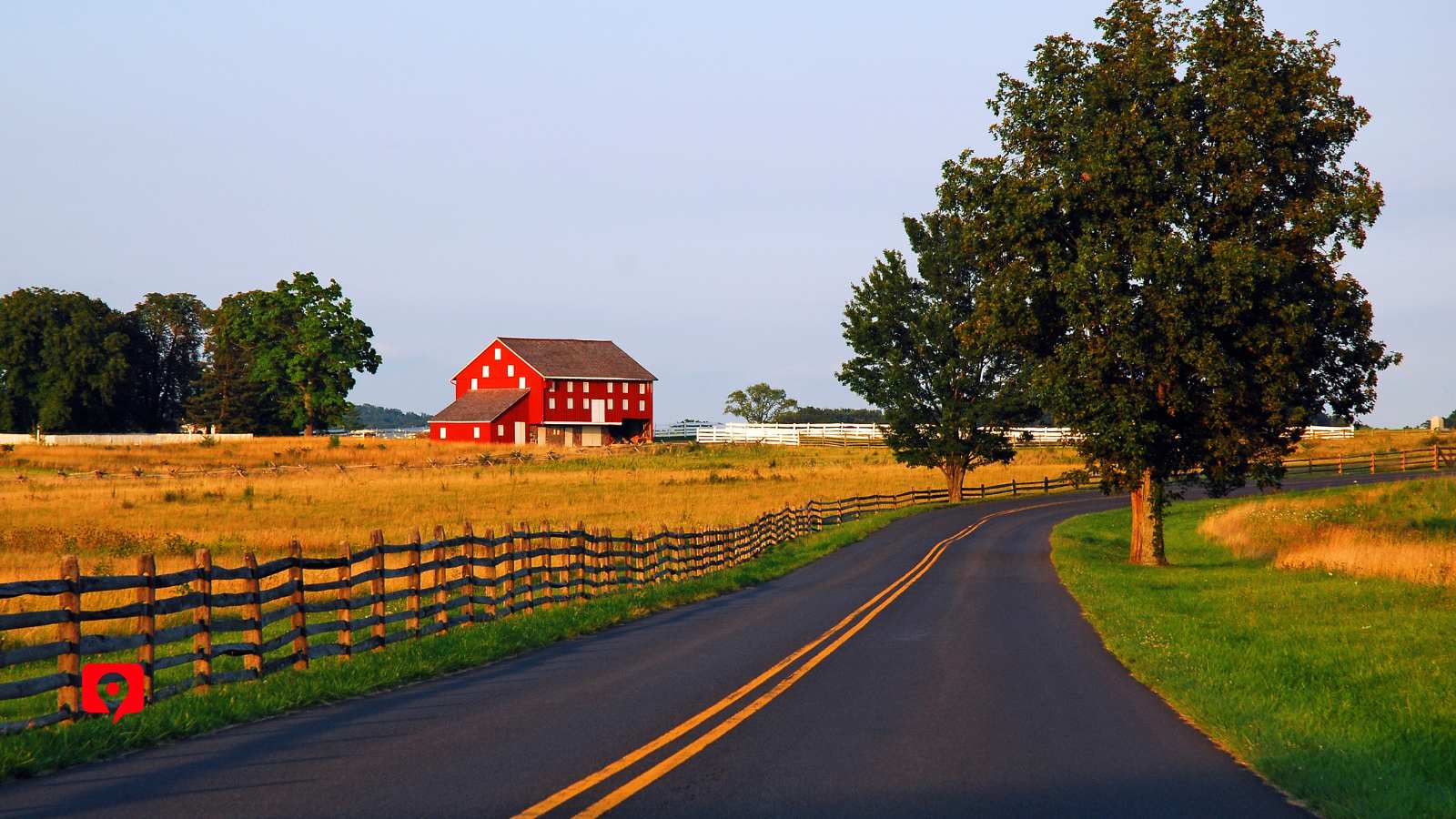
Getting to Gettysburg by car is straightforward from any direction. U.S. Route 15 runs north-south and skirts the eastern edge of town with easy exits, making it the most convenient route if you are driving up from the Washington, D.C. area or down from Harrisburg. If you are approaching from the east or west, U.S. Route 30 will lead you directly into the heart of Gettysburg.
Entrance Fee
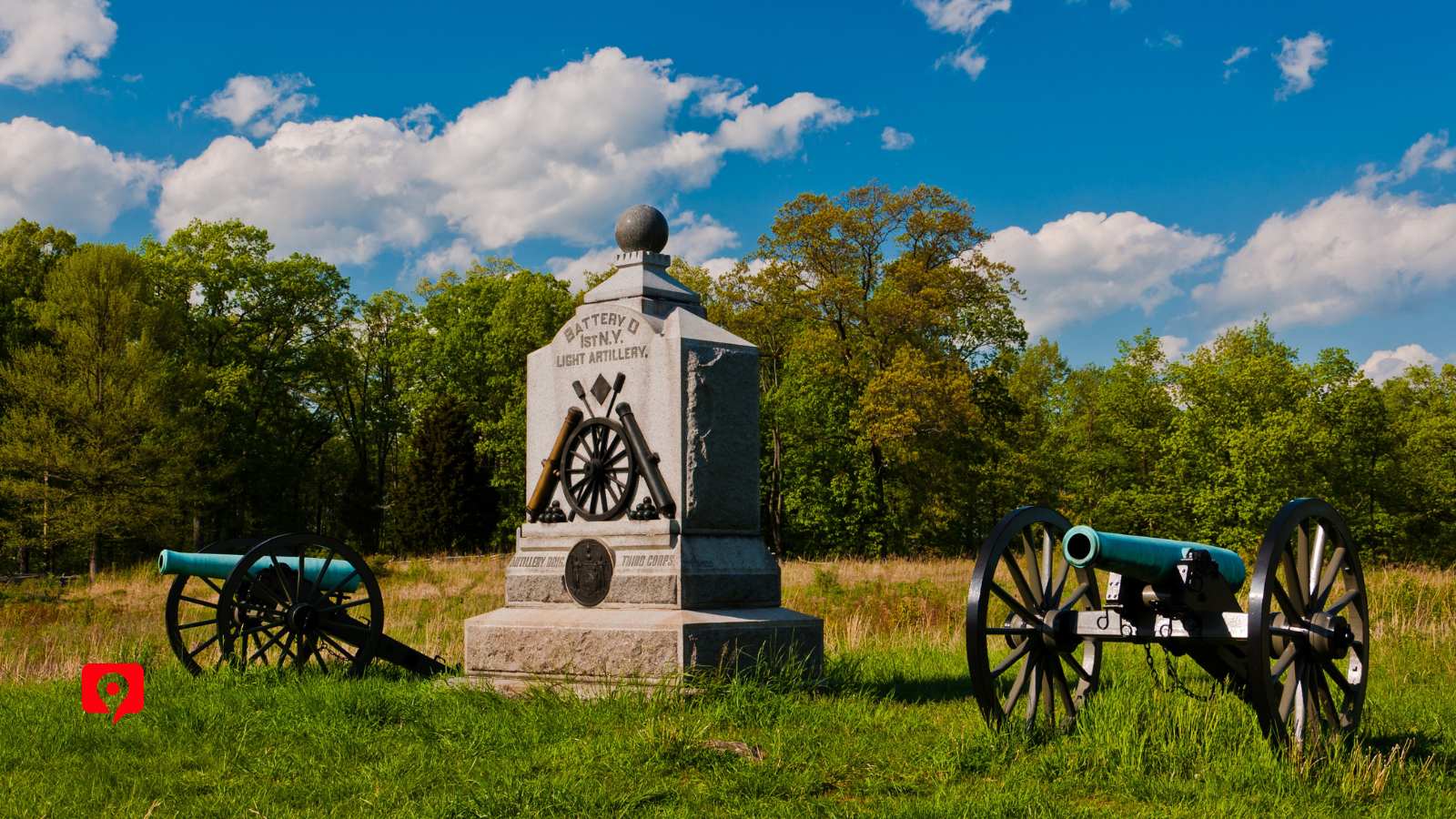
Gettysburg National Military Park does not charge an entrance fee to visit the battlefield, monuments, or to enter the Visitor Center building. Tickets are required for the Gettysburg Museum of the Civil War, the Cyclorama painting, and the film, with prices that vary by age group. Most ranger programs are free.
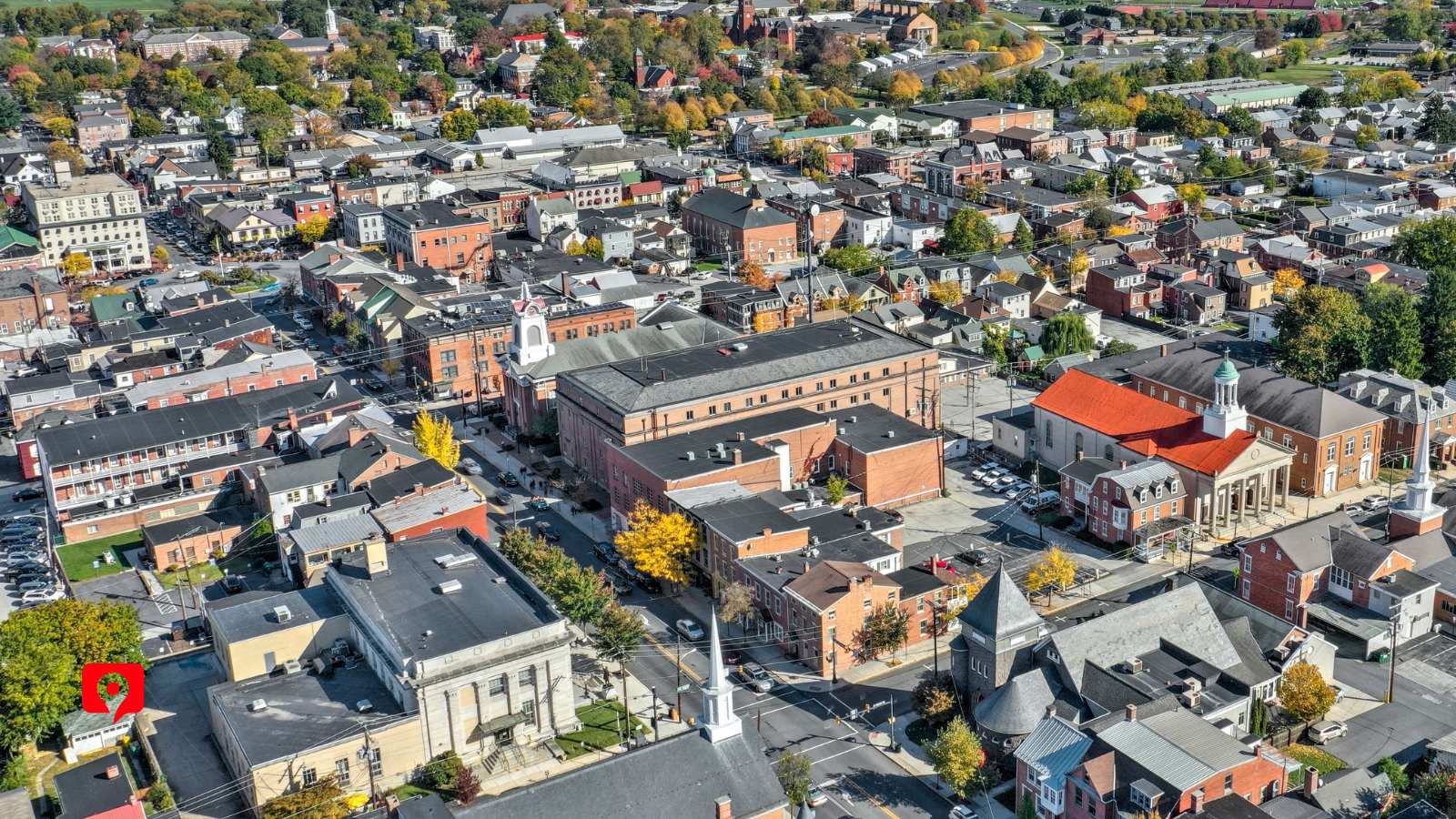
Staying in the town of Gettysburg is your most convenient option for quick access to the National Military Park. You will find a wide mix of accommodations just minutes from the battlefield, ranging from traditional hotels to historic bed-and-breakfasts.
Downtown Gettysburg is perfect if you want a charming, walkable home base. This historic area is filled with boutique inns, restaurants, and shops, putting you steps away from attractions like the Gettysburg Heritage Center on Steinwehr Avenue.
For an outdoorsy experience, several private campgrounds and RV parks sit just a short drive away, as camping is not permitted inside the national military park itself. Popular favorites offering RV and tent sites include Gettysburg Campground, Artillery Ridge Campground, Drummer Boy Camping Resort, the Gettysburg/Battlefield KOA, and Round Top Campground.

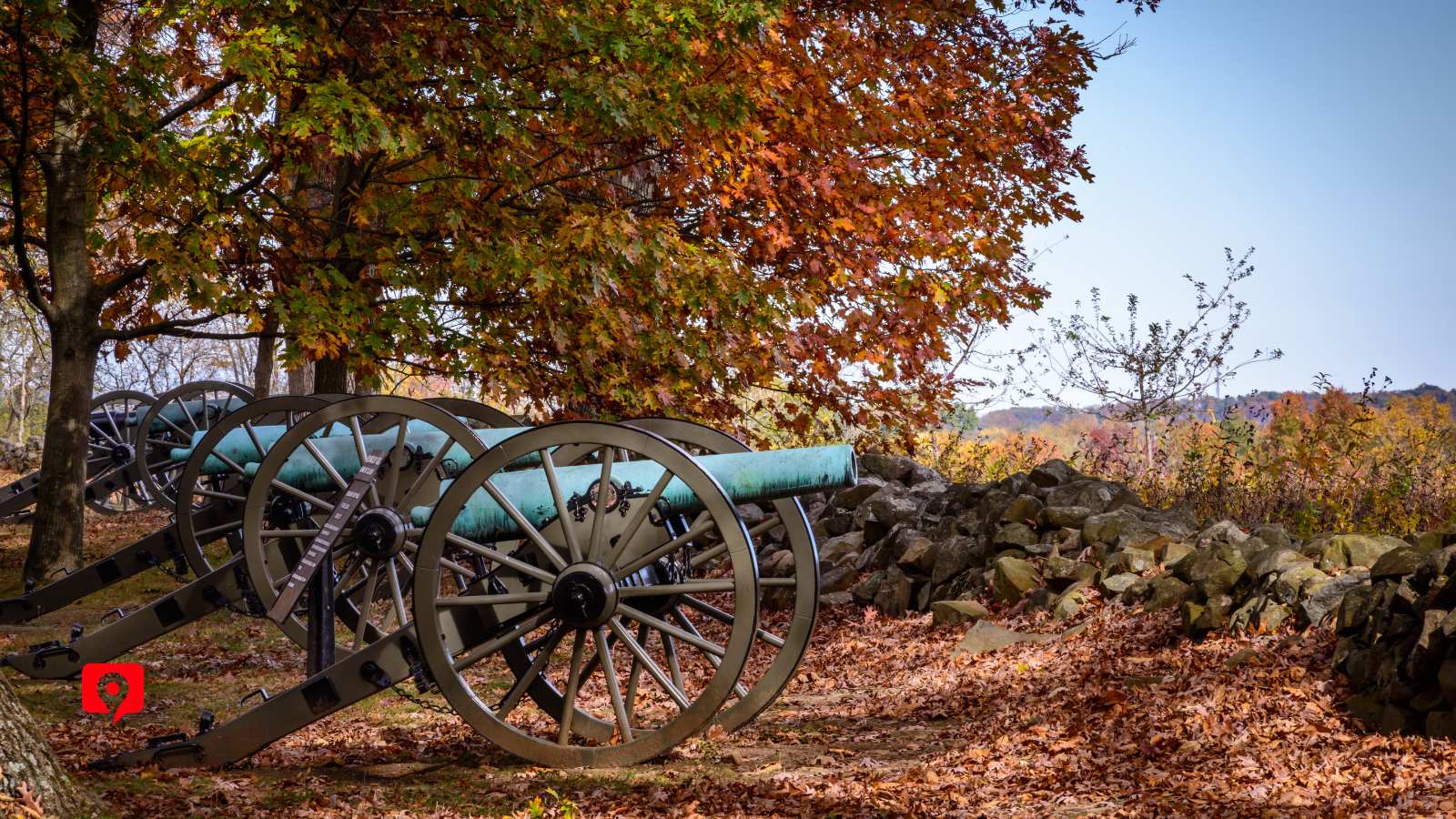
Spring and fall are generally the most comfortable times to visit Gettysburg. These seasons offer pleasant weather for exploring the battlefield, whereas summers can become extremely hot and humid. Summer is also the peak tourist season, bringing heavier traffic, fuller parking lots, and larger crowds, particularly during the early July battle anniversary.
For a quieter experience, plan your trip for a weekday during the spring or fall. Starting your day early and focusing on a few key areas at a time will help you avoid the heaviest crowds. Winter visits offer a peaceful alternative with the battlefield open daily. However, keep in mind that daylight is limited and some amenities operate on reduced seasonal schedules.
Gettysburg National Cemetery
This is where Abraham Lincoln delivered his immortal Gettysburg Address, beginning “four score and seven years ago.” As he dedicated the cemetery to the memory of the fallen soldiers, he rallied the nation to finish the fight.

Little Round Top
This small hill became the turning point of the battle as the 20th Maine Volunteer Infantry Regiment resisted repeated Confederate assaults and managed to hold the high ground. Today, visitors can climb to the top and survey the field below, getting a panoramic view of the soldiers’ positions.

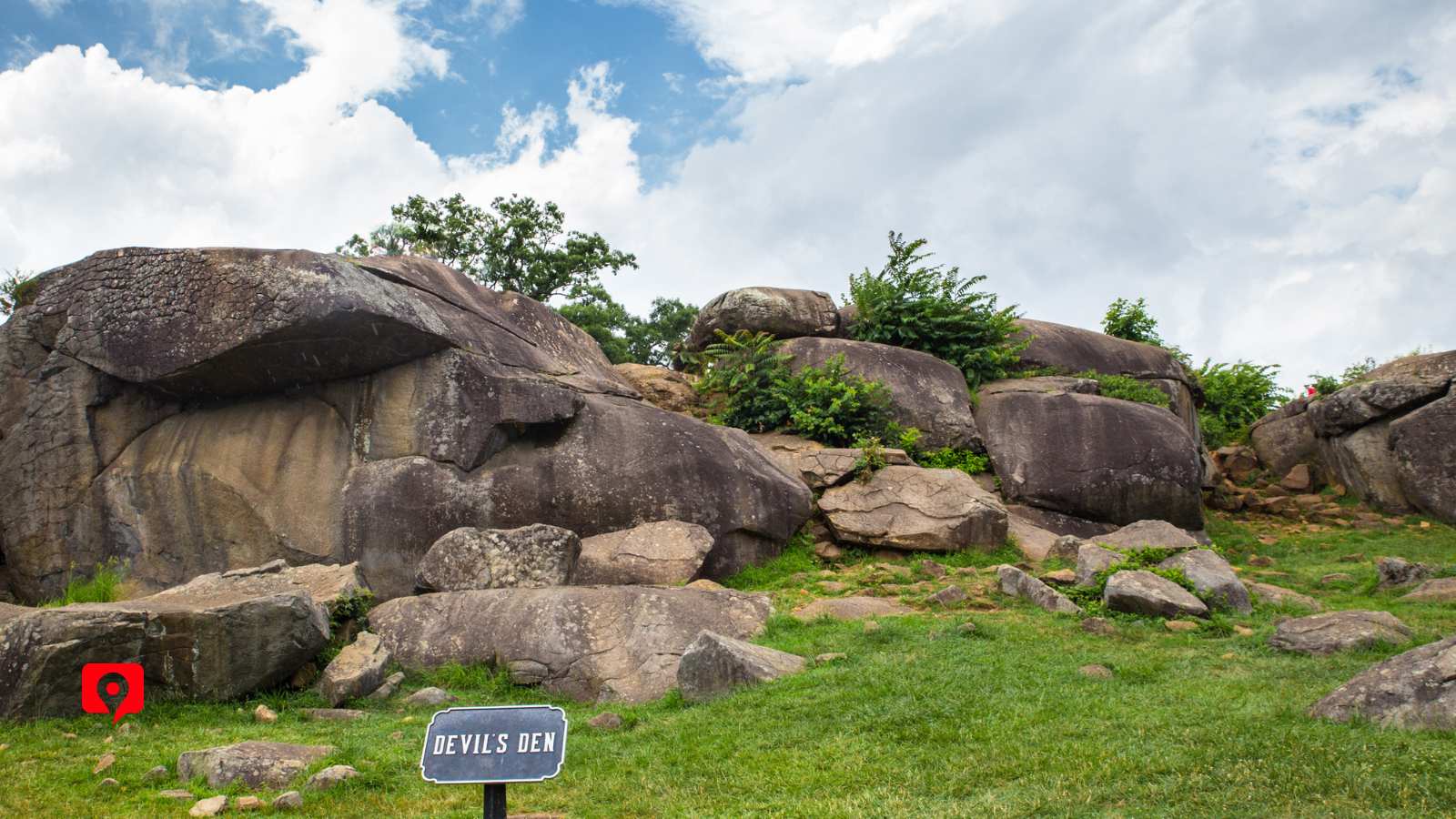
Devils Den
This rocky terrain was the site of some of the most brutal fighting in Gettysburg. Here, Confederate sharpshooters set up positions among the volcanic rocks while Union soldiers tried to dislodge them by any means necessary. Devils Den features a walking route with additional stories detailing the chaotic struggle that took place here and digging into other elements of the conflict, like the emergence of war photography.
Cemetery Ridge
East Cemetery Hill was a vital Union position during the Battle of Gettysburg. Almost lost during a rare midnight raid, reinforcements arrived in the nick of time to protect the Union fortifications on the hill.

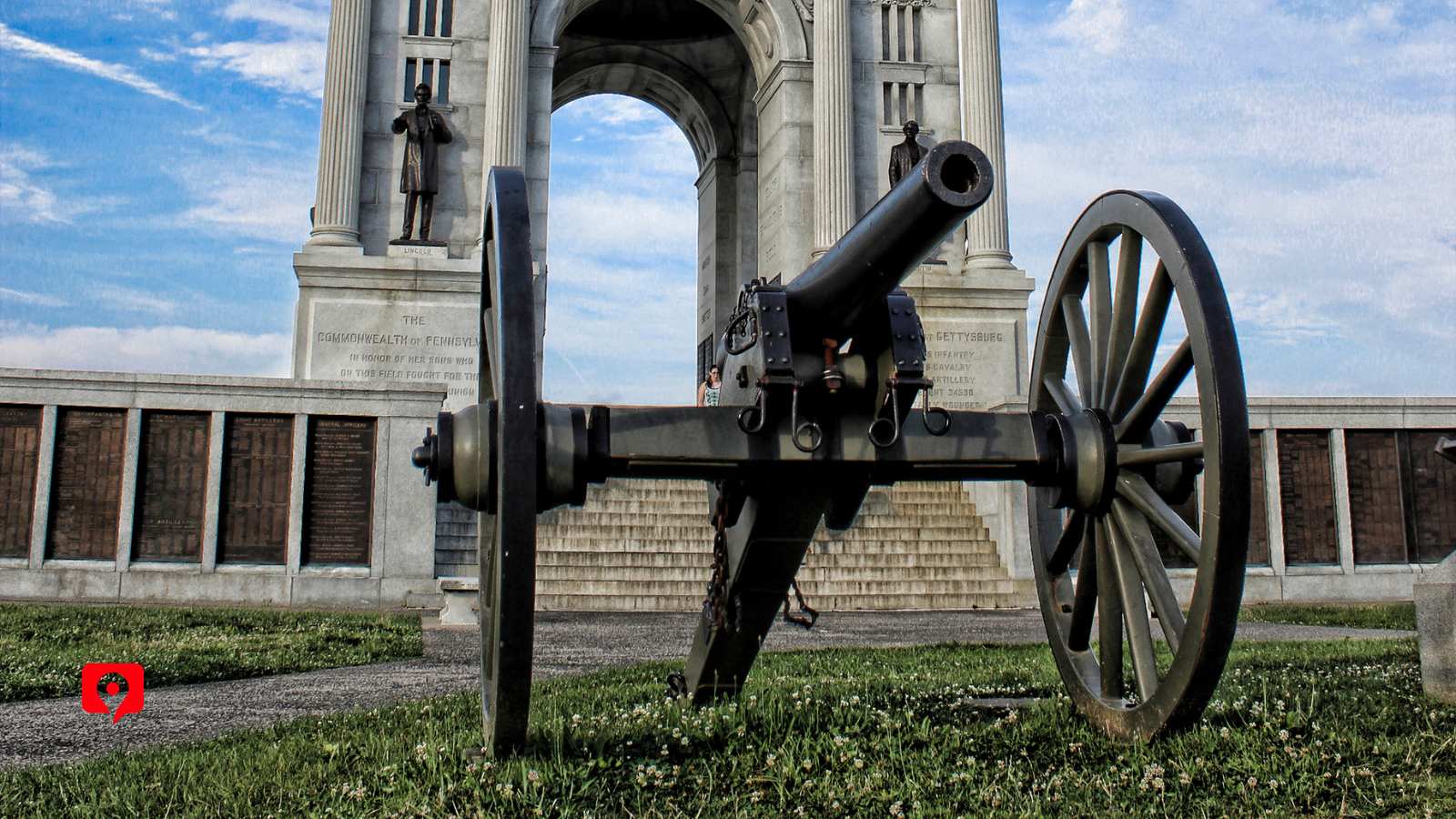
Pennsylvania Memorial
The Eternal Light Peace Memorial is a symbol of reconciliation, dedicated on the 75th anniversary of the Battle of Gettysburg in 1938. Civil War veterans from both the Union and Confederate sides attended the ceremony. The towering granite structure is topped with a gas-lit flame, signifying enduring peace. The inscription, “Peace Eternal in a Nation United,” commemorates the unity and healing that followed the war, reminding visitors of the importance of national reconciliation after the devastating conflict.

Seminary Ridge
This once-peaceful seminary found itself at the heart of the fighting on the first day of battle, as Union forces desperately tried to hold off the Confederate attackers. Our tour features an in-depth walk around the historic buildings and the unlikely heroes who stayed to defend their town.
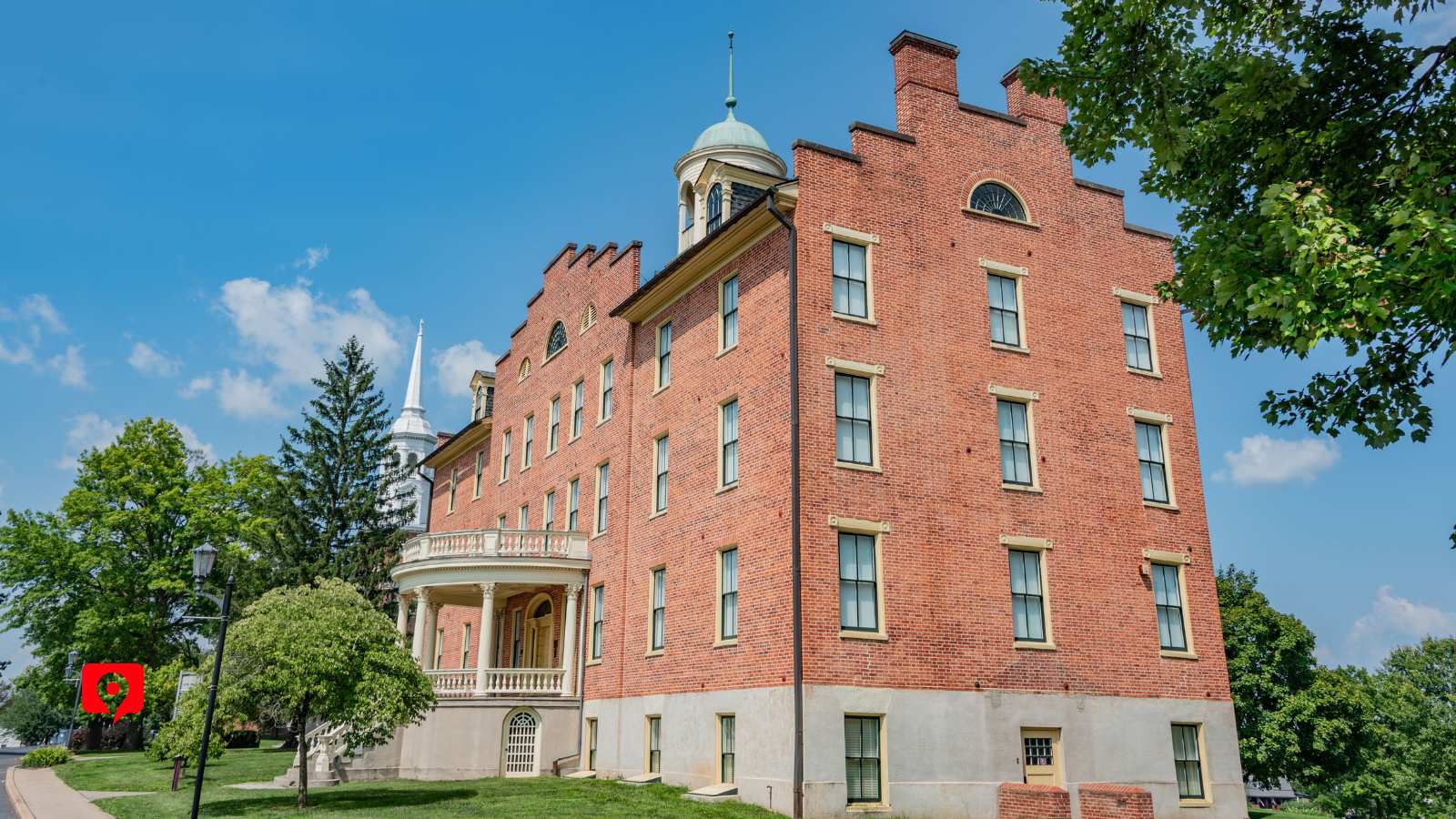
Eternal Light Peace Memorial
The Eternal Light Peace Memorial keeps watch over the field as a symbol of reconciliation and the cost of war. The granite tower was dedicated by veterans of both Union and Confederate armies, and bears an everlasting flame on top to signify enduring peace between the North and South.
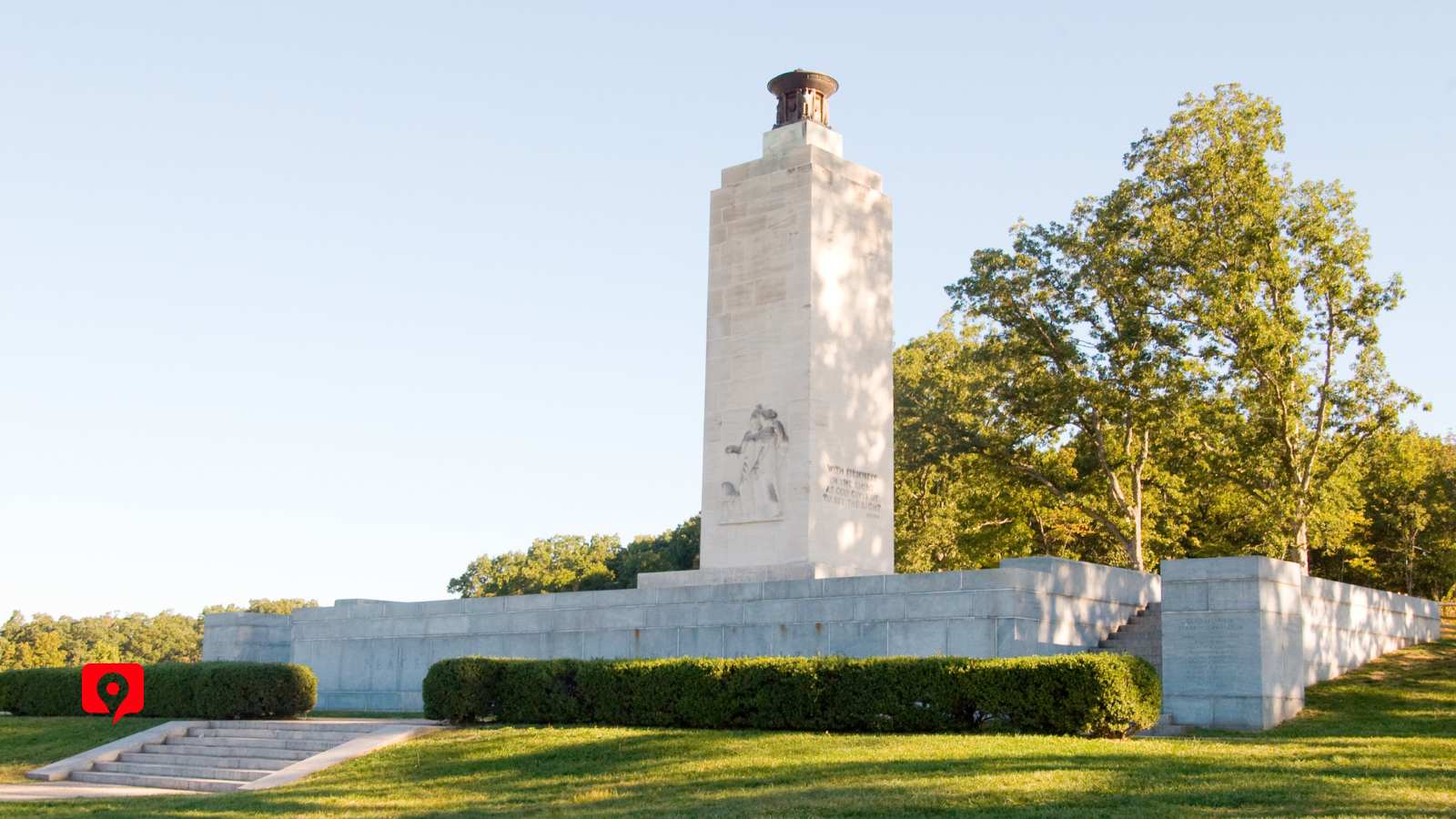
Virginia Monument
A massive statue of General Robert E. Lee sits astride his horse, Traveller, and gazes towards the ill-fated spot of Pickett’s Charge. Unveiled in 1917, the monument is dedicated to the Virginian soldiers who gave their lives at Gettysburg.
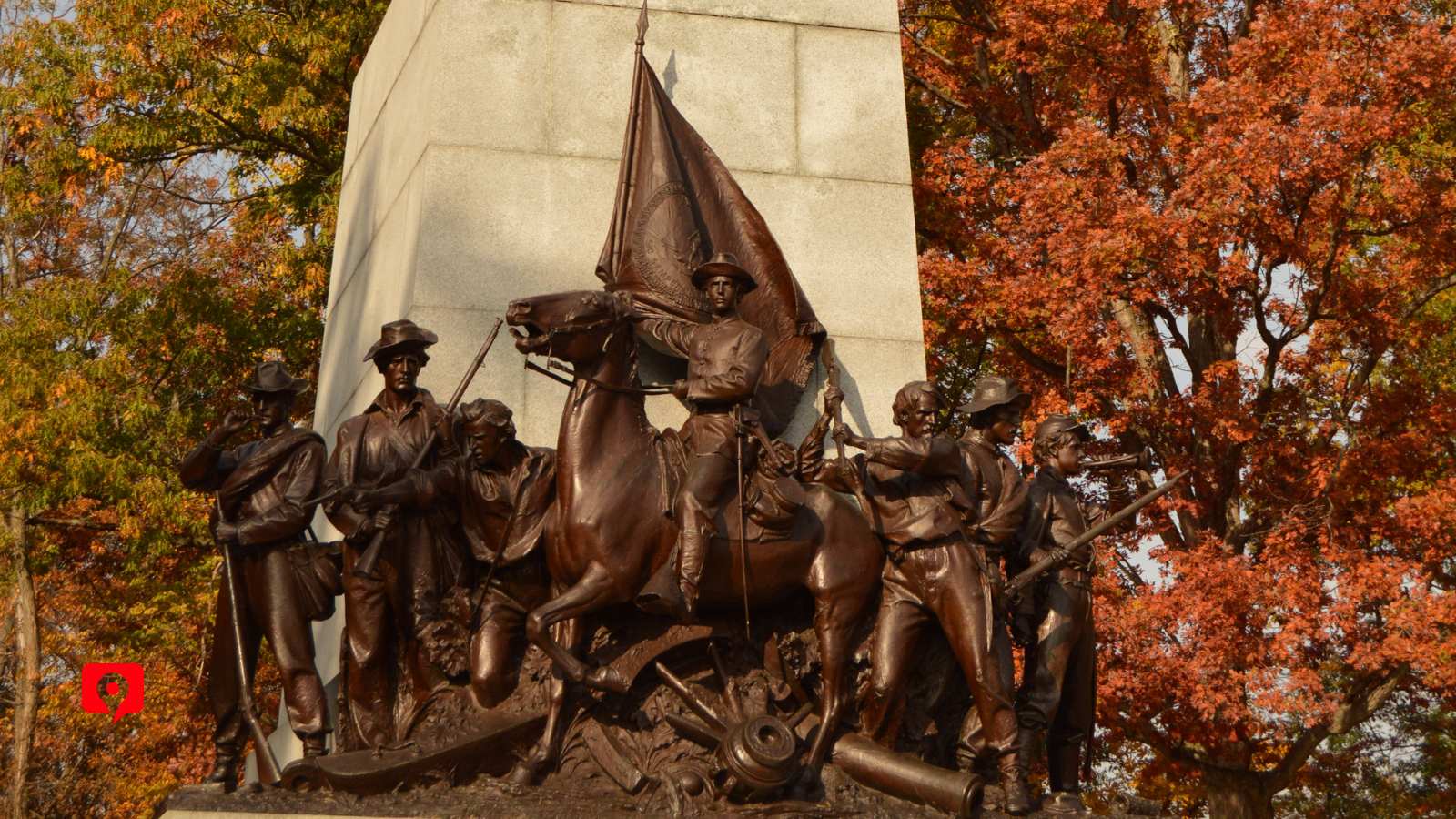
East Cemetery Hill
East Cemetery Hill was a vital Union position during the Battle of Gettysburg. Almost lost during a rare midnight raid, reinforcements arrived in the nick of time to protect the Union fortifications on the hill.
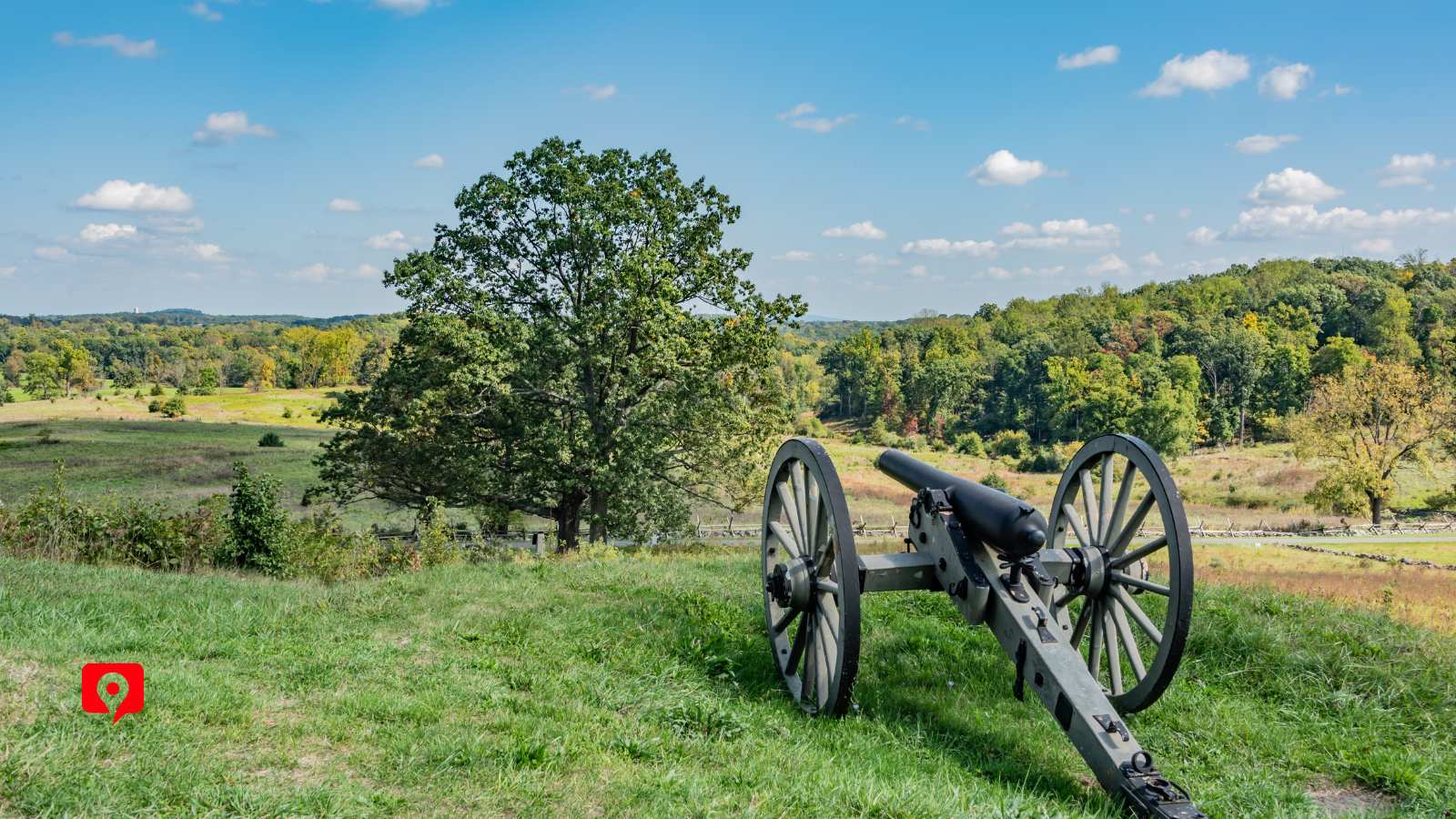


Plan to spend a full day exploring Gettysburg Battlefield if possible. This allows enough time to fully experience the unfolding battle through the sites along the drive, plus stop and take the included detailed walks of Devil’s Den and Cemetery Ridge.
If you have extra time after exploring the battlefield, you can take our one-mile walking tour through Historic Gettysburg Downtown, which leads through key sites of the battle that took place in the city streets.

This driving-and-walking tour of the Gettysburg Battlefield is best experienced over a full day; however, visitors with only half a day can still complete the entire driving tour and work in quick stops at major battlefield sites.
Here are optional itineraries for both a half-day and full day in Gettysburg:
Half-Day Itinerary:
The audio narration will direct you where to go if coming from any other approach to the National Military Park. Follow the suggested route to experience a chronological retelling of the battle, with instructions on where to stop to see each pivotal site.
Simply follow the narration’s instructions, allowing for enough time to hear all the details of the three-day battle as you drive by each historic site. If time allows, try to at least get out for quick stops at Cemetery Ridge and Little Round Top.
Full-Day Itinerary:
A full day gives you plenty of time to enjoy the entire driving tour, plus take the detailed walks along Cemetery Ridge and Devil’s Den. Spend as much time as you like visiting around each monument and point of conflict. If you have a little extra time in the area, you can drive back to the Gettysburg Heritage Center, park, and take a one-mile walking tour of Gettysburg’s historic downtown, which also saw action during the first day of the battle.

Car Charger and a Battery Pack: Using your phone’s GPS services will drain your battery a little more quickly than usual, so bring a charger to keep your phone plugged into your car during the driving portions, and possibly a backup battery pack if you plan to take a lot of photos.
Comfortable Footwear: Whether stopping along the Driving Tour route, exploring monuments, or strolling through Soldiers’ National Cemetery, sturdy walking shoes with excellent grip are essential.
Weather-Appropriate Clothing: Layer up! Mornings and evenings can be cool, even in summer. Bring a light jacket or windbreaker in case of wind or rain.
Sun Protection: Much of the battlefield is open with little shade. Pack sunscreen, a wide-brimmed hat, and sunglasses.
Water and Snacks: There are limited food and water options on the battlefield. Bring water and small snacks to stay energized during your visit.
Binoculars or Camera: Perfect for viewing distant monuments, observation towers like Longstreet Tower, and the sweeping battlefield vistas.
Insect Repellent: Useful during warmer months or after rain, especially in grassy areas.
Earbuds or Headphones: During busier seasons, you may want to listen to the tour audio through earbuds or headphones to avoid disturbing other visitors while viewing monuments and battlefield sites up close.